
Quick Answer: What Soil Temperature Germinates Grass Seed?
Grass seed germinates on soil temperature, not the calendar. Cool-season grass seed sprouts reliably once 2-inch soil holds 50°F, and 50-65°F is the band to seed into; warm-season seed like bermudagrass needs about 65°F soil to start and germinates fastest at 75-85°F. Measure at a 2-3 inch depth, confirm a 3-5 day trend, and match your species to the temperature in the ground right now.
Is your soil warm enough to seed?
Your soil near Kansas Lottery, KS: 71°F at 2 inches, as of Sep 30, 2026.
| Grass species | Seeding soil temp (2 in) | Lab optimum (air) | Days to germinate | Right now |
|---|---|---|---|---|
| Kentucky bluegrass | 60–70°F | 59/86°F (16h/8h) | 14-30 | Too warm to establish |
| Tall fescue | 60–70°F | 68/86°F (16h/8h) | 7-12 | Too warm to establish |
| Perennial ryegrass | 60–70°F | 68/86°F (16h/8h) | 5-10 | Too warm to establish |
| Fine fescue | 60–70°F | 59/77°F (16h/8h) | 7-14 | Too warm to establish |
| Bermudagrass | 75–90°F | — | 10-30 | Germinates slowly |
| Zoysia | 75–90°F | — | varies | Germinates slowly |
| Buffalograss | 75–90°F | — | 14-30 | Germinates slowly |
| Centipede | 75–90°F | — | varies | Germinates slowly |
Lab optimum is Purdue’s alternating-temperature protocol: 16 hours at the first temperature, then 8 hours at the second, measured in air. It is a laboratory germination test, not a soil target. Seed to the soil column.
Most failed seedings are timing problems, not seed problems. People scatter seed when the calendar says spring, then wonder why nothing comes up for three weeks or why it sprouts unevenly and dies in June. The seed was fine. The soil was 44°F.
This guide is built around one fact: germination is a temperature-gated biological process. Each species has a base temperature below which the embryo cannot divide cells, an optimum where germination is fastest, and a ceiling where heat stalls it. Below you will find species-by-temperature germination tables, a regional timing chart, seeding-depth and moisture rules, and how to tell whether the seed in your garage is still alive. Every number is sourced to a university extension or peer-reviewed study.
The Biology: Why Soil Temperature Gates Germination
A grass seed is a packet of stored energy and a dormant embryo. To wake up, it absorbs water, activates enzymes that convert stored starch into usable energy, and begins cell division to push out a root and shoot. Every step is enzyme-driven. Below the species base temperature, the enzymes move too slowly to sustain cell division: the seed swells with water but does not grow. Above the optimum, heat denatures those enzymes and stresses the embryo, so germination slows or stops. In between is the band you are aiming for.
Base, Optimum, and Maximum Temperatures
For cool-season grasses, the practical base is around 40°F. Rutgers gives the working floor: seed will not germinate until soil temperatures are consistently above 50°F, and air needs to be around 60°F or above before soil holds there. In spring the band to seed into is 50-65°F, which is where Penn State puts cool-season root growth at its strongest.
The 65°F top is not a germination limit, and no extension publishes it as one. Germination keeps speeding up above it (the University of Maryland gives 50-70°F at a 1-inch depth). It is our cutoff for spring establishment: past 65°F on a warming curve you are seeding into crabgrass pressure and oncoming summer heat, and the seedling runs out of cool weather before it roots. In fall the same species seed higher, 60-70°F on a falling curve, because the weather ahead of the seedling is getting better rather than worse. See the fall overseeding guide for that window.
The 59-86°F Numbers You See Everywhere Are Not a Soil Range
Search for grass seed germination temperatures and you will find the same figures repeated on hundreds of sites: Kentucky bluegrass 59-86°F, tall fescue and perennial ryegrass 68-86°F, fine fescue 59-77°F. They trace back to a Purdue University turf table, and almost everyone republishing them has dropped the footnote that explains what they mean:
Temperatures separated by a dash indicate an alternation of temperatures. The first number is for approximately 16 hr and the second for approximately 8 hr.
They are a laboratory protocol, not a range. "59-86°F" means 16 hours at 59°F alternating with 8 hours at 86°F, simulating a cool night and a hot afternoon, and Purdue measures it in air rather than soil. Purdue also notes the maximum and minimum germination temperatures "are poorly defined because of the extreme slowness of germination."
This matters because reading them as a continuous soil range gives you a badly wrong answer. It suggests 80°F soil is comfortably inside the optimum for Kentucky bluegrass, so July would be a fine time to seed a bluegrass lawn. It is not. The seed may well sprout in hot soil; the seedling then faces heat and disease with no root system. Seed to the soil band, not to the lab numbers.
Germination temperature and growth temperature are different numbers. Penn State Extension notes that cool-season root growth is most vigorous at 50-65°F soil and optimum leaf and shoot growth occurs at 60-75°F. This is why the practical seeding sweet spot is the 50-65°F band: warm enough that the seed germinates at a useful rate, cool enough that the seedling's roots establish vigorously rather than burning energy on top growth.
For warm-season grasses, the base is much higher. Texas A&M AgriLife Extension turf guidance reports that warm-season grasses need soil sustained around 65°F before they make significant growth, with germination fastest in the 75-85°F range. Bermudagrass, the most commonly seeded warm-season species, germinates reliably once 2-inch soil holds in the upper 60s and climbs from there. Note that 85°F is where germination is quickest, not a ceiling: warm-season seeding stays workable up to about 90°F, which is why summer seeding is normal across the South.
These are not the same number. Warm soil sprouts seed faster, but cool-season seedlings grow their strongest roots at 50-65°F. That is why you seed cool-season grass into soil that is warming through the 50s, not soil that has already hit 80°F: the seed sprouts and the seedling immediately enters its best rooting window instead of racing summer. For the full thermal map of every lawn task, see our soil thermometer guide.
Days to Germination by Species
The single biggest practical takeaway is that species differ enormously in how fast they sprout, and that difference drives every seeding decision. UC IPM (University of California) gives days-to-germination under good conditions:
| Species | Type | Days to germinate | Notes |
|---|---|---|---|
| Perennial ryegrass | Cool-season | 5-10 | Fastest common lawn grass |
| Annual ryegrass | Cool-season | 5-10 | Temporary winter color on warm-season lawns |
| Rough bluegrass | Cool-season | 7-10 | Shade/wet sites |
| Tall fescue | Cool-season | 7-12 | Best all-rounder for transition zone |
| Hard fescue | Cool-season | 7-14 | Low-input, shade tolerant |
| Red fescue | Cool-season | 7-14 | Fine fescue, shade |
| Colonial bentgrass | Cool-season | 10-14 | Fine turf, high maintenance |
| Creeping bentgrass | Cool-season | 10-14 | Greens-height turf |
| Kentucky bluegrass | Cool-season | 14-30 | Slowest; small seed, limited energy |
| Seeded bermudagrass | Warm-season | 10-30 | Needs 65°F+ soil to start |
| Buffalograss | Warm-season | 14-30 | Native, low-water |
Why Perennial Ryegrass Wins the Speed Race
Advanced Turf Solutions explains the mechanism: perennial ryegrass is the fastest-germinating common lawn grass, with visible sprouting in as few as 5 days, while Kentucky bluegrass is the slowest at 14-30 days because its small seeds carry limited stored energy. A bigger seed has more reserve starch to fuel the push to the surface; a tiny bluegrass seed must reach light before it runs out of fuel, so it goes slower and is less forgiving of being buried too deep.
This is why quality cool-season blends pair the two. The ryegrass throws up fast cover and stabilizes the surface, buying the bluegrass the weeks it needs to germinate and begin spreading. If you are renovating, our affordable lawn renovation guide for cool-season lawns walks through blend selection on a budget.
Fast germination is not automatically better. Perennial ryegrass sprouts first but is less heat and drought tolerant than tall fescue and can crowd out slower-establishing species if overused in a blend. Match the species to the job: fast cover and quick patches favor ryegrass; long-term durability in the transition zone favors tall fescue; spreading recovery favors Kentucky bluegrass once it establishes.
Cool-Season Germination Speed by Soil Temperature
Days-to-germinate figures assume soil in the optimum band with consistent moisture. Cool the soil and every timeline stretches. The table below shows directional germination windows for the four main cool-season species across the temperatures you seed into. Treat the warm end as the practical ceiling, since by then you are fighting crabgrass and heat.
| 2-inch soil temp | Kentucky bluegrass | Tall fescue | Perennial ryegrass | Fine fescue |
|---|---|---|---|---|
| 40°F | No germination | No germination | No germination | No germination |
| 50°F | 21-28 days | 14-21 days | 10-14 days | 14-21 days |
| 55°F | 14-21 days | 10-14 days | 7-10 days | 10-14 days |
| 60°F | 14-21 days | 7-14 days | 5-10 days | 7-14 days |
| 65°F | 14-21 days | 7-12 days | 5-7 days | 7-10 days |
| 70°F | 14-21 days | 7-12 days | 5-7 days | 7-14 days |
| 75-85°F | Slows, root growth poor | Germinates, summer stress risk | Germinates, heat-intolerant | Slows |
Days-to-germination ranges from UC IPM. The 75-85°F row is included to show what happens when you seed cool-season grass into summer soil: germination is not the failure point, establishment is.
The pattern is clear, and notice what it is not: there is no temperature where a species switches on. Every one of them germinates from 50°F upward, and every one gets faster as the soil warms, with no break anywhere in the band. At 50°F all four are slow and Kentucky bluegrass is painfully slow at three to four weeks. Past 60°F ryegrass and the fescues are quick while bluegrass still lags. Above 70°F germination is fast but you are seeding into a closing window, with crabgrass pressure and summer heat arriving before shallow roots can carry the seedling through. That tradeoff is the core of our spring overseeding guide for cool-season grass, and it is why fall is the preferred cool-season seeding window, covered in the fall overseeding guide.
This is why the seeding band is the same 50-65°F for all four species in spring. The band is not a statement about where each species germinates, which the table above shows is a smooth curve with no per-species cutoff. It marks where a seedling has the cool weather it needs to root before summer.
Tall Fescue Germination Soil Temperature
Tall fescue seeds into the same 50-65°F spring band as the rest of the cool-season group. Iowa State Extension puts the floor there in its tall fescue guidance: germination is slow below 50°F. What changes across that band is speed, not whether it works. Expect 14-21 days at 50°F, tightening to 7-12 days by 60-70°F, and NC State Extension reports the fastest germination once soil is past 60°F with air in the 68-77°F range. Read 60°F as the point where things get quick, not as a gate you have to clear.
It is the best all-rounder for the transition zone: more heat- and drought-tolerant than ryegrass or bluegrass once established, which also makes it the most forgiving of the four if you have to seed in spring. Seed into soil warming through the 50s and low 60s so the seedling roots vigorously in the 50-65°F root-growth window before summer.
Kentucky Bluegrass Germination Soil Temperature
Kentucky bluegrass is the slowest common cool-season grass, needing 14-30 days even in warm soil because its small seed carries limited stored energy. It germinates from about 50°F and seeds into the same 50-65°F band as the rest of the cool-season group, but it lags every other species at every temperature. Keep the top inch consistently moist through the full three-to-four-week window, and expect ryegrass or fescue in a blend to green up first while the bluegrass establishes its spreading roots.
Perennial Ryegrass Germination Soil Temperature
Perennial ryegrass is the fastest common lawn grass, visible in as few as 5 days and 5-10 days across the 55-70°F band. It germinates from 50°F and seeds into the standard 50-65°F cool-season band, same as the rest of the group; what sets it apart is speed once it starts, not an earlier opening. Rutgers notes it has even been observed germinating below 40°F, which is why it is the species of choice for dormant and late-fall seeding. Its speed is why it is blended with slower Kentucky bluegrass for quick cover, but it is less heat- and drought-tolerant, so do not overuse it in a blend where it can crowd out slower species.
Fine Fescue Germination Soil Temperature
Fine fescues (red, chewings, hard) seed into the same 50-65°F band as the rest of the cool-season group and germinate from 50°F in 14-21 days, tightening to about a week by the low 60s. Where they differ is at the top of the band rather than the bottom: they are quickest around 65°F and slow again by 70°F, while tall fescue holds its pace. That mild preference for the cooler end, plus their shade and low-input tolerance, makes them a forgiving choice for early-spring or late-fall seeding into cool soil. It is not a lower floor; nothing in this group starts before 50°F.
Seeding into 40-45°F soil is the most common spring mistake. The seed imbibes water and swells but cannot divide cells, so it sits cold and wet for weeks, slowly depleting its energy reserves and exposed to seedling fungal diseases. Many seeds die before the soil warms enough to germinate. Wait for a sustained 50°F trend before you put seed down.
Warm-Season Germination by Soil Temperature
Warm-season grasses run on a higher thermostat. Texas A&M AgriLife sets the floor at roughly 65°F soil temperature for germination to begin, with 75-85°F as the optimum for fast, even sprouting. Bermudagrass specifically will not germinate until soil reaches 65-70°F at a 2-inch depth, and the best seeding window runs late April through early July.
| 2-inch soil temp | Bermudagrass | Zoysia | Buffalograss | Centipede |
|---|---|---|---|---|
| Below 60°F | No germination | No germination | No germination | No germination |
| 65°F | 14-30 days (slow start) | Very slow | 14-30 days | Slow |
| 70°F | 10-21 days | Slow | 14-30 days | Slow |
| 75-85°F | 10-15 days (optimum) | Slow but steady | 14-30 days | Slow |
Bermudagrass and buffalograss day counts from UC IPM; warm-season floor (65°F) and optimum (75-85°F) from Texas A&M AgriLife. Zoysia and centipede are slower and more temperature-sensitive than bermudagrass; the sources give the general warm-season band rather than precise per-species day counts.
Bermudagrass: The Aggressive Standard
Seeded bermudagrass is the fastest and most aggressive warm-season grass to establish from seed, which is why it dominates southern lawns and sports fields. Texas A&M AgriLife pegs the practical seeding window from late April through early July, once soil reliably holds 65-70°F at 2 inches. Seed too early into cool spring soil and it sits, vulnerable to rot, until the ground warms. For fall renovation of warm-season turf, see our fall overseeding guide for warm-season lawns.
Zoysia and Centipede: Patience Required
Zoysia and centipede germinate slowly even in warm soil. A spring-seeded zoysia lawn may not reach full coverage until the following summer, which means a full season of weed suppression and irrigation during establishment. Many homeowners choose sod, plugs, or sprigs for these species instead. St. Augustine is almost never seeded at all because of poor seed viability.
Regional Timing: When Does Soil Hit the Seeding Threshold?
Soil temperature lags air temperature, so the calendar is only a rough guide. SoilTemps.com / Pennington note that soil temperature lags air by roughly 1-3 weeks in spring, so a warm early-April air spell can still leave the 2-inch soil in the mid-40s. You need sustained air temperatures about 10°F warmer than the soil target to hold soil in the 50-65°F band. The table below shows when the cool-season 50°F threshold typically arrives at a 2-inch depth by region. These are directional windows; verify with a thermometer or a local extension soil-temperature network.
| Region / band | Representative states | ~50°F soil arrives (spring) | Notes |
|---|---|---|---|
| Far North / Upper Midwest (Zones 3-4) | MN, WI, ND, northern ME | Late April - early May | UMN Waseca data: ~40°F first week of April, warming to ~55°F by April 15. |
| Northern cool-season (Zones 5-6) | NY, MI, OH, PA, IA, NE, northern IL | Mid-to-late April | Fall is still the preferred seeding window; spring works once soil holds 50-65°F. |
| Transition zone (Zones 6-7) | KY, TN, VA, MO, central/northern AR, NC piedmont | Mid-to-late March | Cool-season spring window opens early but closes fast as soil nears 70°F; fall is better for cool-season here. |
| Upper South / warm-season start | NC, SC, GA, AL, northern TX | Cool-season: early-mid March. Bermuda 65°F: late April - May | Bermuda will not germinate below ~65°F at 2 in; seed late April through early July. |
| Deep South / Gulf (Zones 8-9) | FL, southern TX, LA, coastal GA | 50°F effectively year-round; bermuda/centipede/bahia 65-75°F target reached April-June | Warm-season only; optimum 75-85°F for fast, even germination. |
Regional thresholds compiled from University of Minnesota (Waseca soil-temperature data) and Texas A&M AgriLife warm-season seeding guidance.
The rule of thumb across all sources: seed cool-season grass into 50-65°F soil (air roughly 60-75°F); warm-season seed needs ~65°F to start and germinates fastest at 75-85°F. Always read at a 2-3 inch depth.
A regional window is a starting guess. Your specific yard depends on elevation, slope aspect, soil type, and microclimate. Check the live 2-inch reading from the station nearest you, then confirm with your own thermometer before committing seed and money to the ground.
How to Measure Soil Temperature Correctly
Air temperature is the most common false signal in lawn care. SoilTemps.com / Pennington are explicit that soil temperature, not air temperature, is the primary germination trigger and should be measured at a 2-3 inch depth. A 75°F afternoon in early April tells you almost nothing about whether the soil 2 inches down has reached 50°F.
To measure correctly, insert a long-stem soil thermometer to a 2-3 inch depth in open turf, away from pavement, foundations, and south-facing slopes that radiate heat. Read mid-morning between 8 and 10 AM, when soil temperature is closest to the daily average. Monitor for 3-5 consecutive days and look for a consistent upward trend before you seed. A dial thermometer with a long probe is the right tool because it reads at the germination depth; a short kitchen probe only samples the surface inch, which swings far more than the soil the seed experiences.
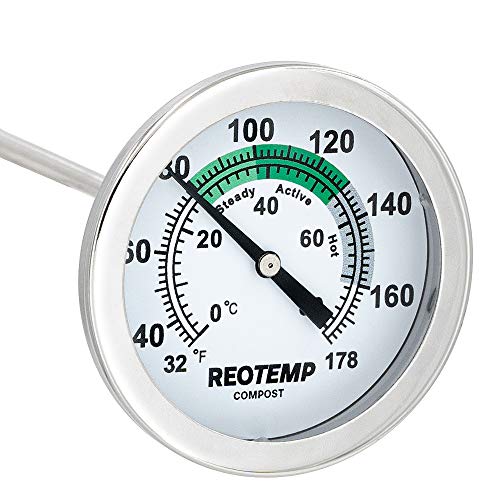
REOTEMP K83B1 12-Inch Soil & Compost Thermometer (32-178°F, dual scale)
A long-stem dial thermometer that reads soil at the 2-3 inch germination depth the extension sources recommend. The right tool for confirming the 50°F cool-season or 65°F warm-season trigger instead of guessing from the calendar or the afternoon air.
For continuous monitoring, SoilTemps.com tracks real-time 2-inch soil temperature from over 380 USDA SCAN and NOAA USCRN stations nationwide. Enter your city or ZIP code at the top of this page, and read the full method in our soil thermometer guide.
Seeding Depth and Moisture: The Other Half of Germination
Temperature readies the seed to grow. Depth and moisture decide whether it emerges. Jonathan Green is direct: grass seed should be planted only about 1/4 inch deep, no more than 1/2 inch, and seed buried under an inch or two will not emerge. The top inch of soil must stay consistently moist through germination because too little moisture dries the seed out and too much excludes the oxygen seedlings need.
Why Deeper Is Not Better
The instinct to "tuck the seed in" with a half-inch of topsoil kills more seedings than cold soil does. A small seed like Kentucky bluegrass carries only enough energy to push a shoot a fraction of an inch to light; bury it under an inch and it runs out of fuel before reaching the surface and dies underground. Bigger seeds like tall fescue tolerate slightly more depth but still top out around 1/2 inch. The goal is seed-to-soil contact, not burial: press seed into the surface, lightly rake or roll, and optionally topdress with a thin layer of compost.
The Moisture-Temperature Interaction
Moisture and temperature work together, and the wrong combination is worse than either alone:
- Cold and wet: slow germination plus high risk of fungal seedling rot. The danger zone.
- Optimum temperature and consistent light moisture: fast, uniform germination. The target.
- Hot and wet: fast germination but heavy disease pressure, and the surface dries fast, so a crust can form and stall emergence.
The practical target is soil in the species optimum band with the top inch never fully drying and no standing water. That means short, frequent watering during germination, then tapering to deeper, less frequent watering as roots develop. Our irrigation timing guide covers how to dial this in by soil temperature.
Once a germinating seed has imbibed water and started metabolic activity, letting it dry out can kill it outright. The most common cause of patchy seedings is a seedbed that crusts over and dries between waterings during the first week. If you cannot water two to three times a day, use a hose-end timer or topdress to hold surface moisture.
Reading the Seed Label: Buy on Pure Live Seed
The cheapest bag is rarely the cheapest seed once you account for what is actually in it. Michigan State University Extension breaks down what a turfgrass seed label reports, and every component sums to 100%:
- Purity: percent by weight of the named cultivar.
- Germination: percent of that pure seed that sprouts under ideal conditions. Never buy below 70%.
- Crop seed: other agricultural seed; should be 1% or less.
- Weed seed: should be under 1%.
- Inert matter: chaff and filler; under 4%.
- Noxious weeds: must be named, and it is illegal to sell seed that contains them.
- Test date: choose seed tested within the prior 12 months.
Pure Live Seed Is the Real Number
A bag advertising "98% pure" tells you nothing by itself. University of Delaware Cooperative Extension explains Pure Live Seed (PLS), the seed that will actually germinate, calculated as pure-seed percent times germination percent. Their example: 98.59% purity times 96% germination equals about 94.65% PLS. Comparing two bags on a PLS basis is the correct way to judge value, because high purity with old, low-germination seed can deliver less live seed than a cheaper bag of fresh seed.
A quality cool-season blend built around turf-type tall fescue is a sensible default for both transition-zone and northern lawns, because the fescue germinates in 7-14 days and tolerates heat and drought far better than Kentucky bluegrass.

Scotts Turf Builder Grass Seed Tall Fescue Mix (5.6 lb, covers ~1,400 sq ft)
A quality cool-season blend built around turf-type tall fescue, which germinates in 7-14 days and tolerates heat and drought better than Kentucky bluegrass. A reliable default for transition-zone and cool-season lawns where summer survival matters.
For the southern tier, a quality bermudagrass seed is the warm-season equivalent, but only if you pair it with a soil thermometer and the late-April-to-July window. Putting bermudagrass seed into 55°F soil wastes the bag.
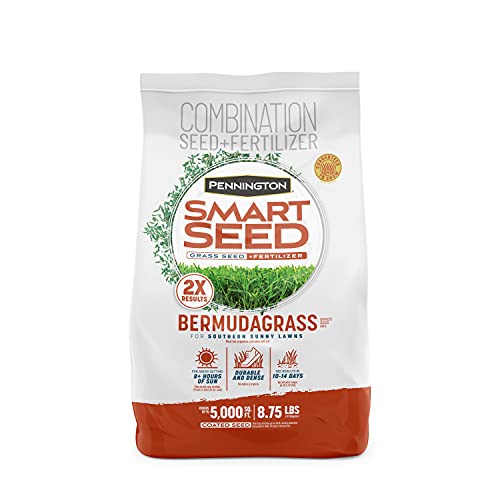
Pennington Smart Seed Bermudagrass Mix (8.75 lb, covers up to 5,000 sq ft overseed)
Quality warm-season seed for the southern tier. Bermudagrass needs 65-70°F soil at 2 inches before it germinates, so pair this with a soil thermometer and the late-April-through-July seeding window for fast, even establishment.
If a label says "VNS" (Variety Not Stated), you are buying generic, unbred, untested seed. Named cultivars cost a little more per bag but germinate faster, establish denser turf, and carry far less weed and crop contamination. Always check for named varieties and a test date within the last 12 months.
Viability Testing: Is My Old Seed Still Good?
Seed that has sat in the garage for two seasons may still be fine or may be mostly dead, and the label germination percentage only applies to the test date. There are two ways to find out.
The Standard Germination Test
The standard germination test is the official viability test and the one a seed lab uses to print the label number. Soares et al., Crop Science (2016) note it takes 3-4 weeks for most grasses. Run a home version: place 50 or 100 seeds on a damp paper towel inside a sealed bag in a warm spot and count how many sprout over two to three weeks. The sprouted fraction is your real germination rate; adjust your seeding rate up if it has dropped.
The Tetrazolium (TZ) Test
When you cannot wait three weeks, the tetrazolium test is the fast alternative. Soares et al. (2016) report the TZ test gives a viability result in 24-48 hours, even for dormant seed: living tissue stains red while dead tissue stays unstained. The study validated TZ against the standard test for tall fescue, annual and perennial ryegrass, orchardgrass, bentgrass, and fine fescues, but found it unreliable for Kentucky bluegrass: seed dormancy inflates the TZ reading relative to the germination test, so a KBG lot can stain alive yet sprout poorly. A seed lab runs it for a small fee, worth it before committing a large renovation to questionable seed.
Shelf Life: How Long Grass Seed Lasts
Grass seed does not last forever, and viability falls every year it sits. Lawn Synergy / SportsField Management report that under proper storage most grass seed stays viable 2-3 years, up to 4-5 years for cool-season types like Kentucky bluegrass and fescue, while warm-season seed such as bermudagrass declines faster, lasting roughly 1-2 years. Germination falls each year: fresh seed near 90% may drop to 70% or lower after a couple of years.
Storage conditions decide where in that range you land. Store seed below 60°F in opaque, airtight containers away from light and moisture. A sealed bin in a cool basement preserves viability far better than an open bag in a hot, humid garage. If you have leftover seed from last fall, run a germination test before relying on it rather than assuming the label number still holds.
The species difference in shelf life matters for buying decisions. Leftover Kentucky bluegrass or fescue from last year is usually still worth using, possibly at a slightly higher rate. Leftover bermudagrass from two summers ago is a coin flip and worth testing first. When in doubt, the test date on the label plus a paper-towel germination test tells you the truth.
Common Germination Mistakes
These are the errors that turn good seed into a bare patch. Avoiding them puts you ahead of most DIY seedings.
Seeding on the calendar instead of soil temperature. The single biggest mistake. Soil lags air by 1-3 weeks, so an April that feels like spring can still have 44°F soil. Measure at 2 inches and confirm a 3-5 day trend.
Burying the seed. Seed deeper than 1/2 inch often never emerges, especially small-seeded Kentucky bluegrass. Aim for 1/4 inch and prioritize contact over burial.
Letting the seedbed dry out. Once a seed starts germinating, a single dry day can kill it. The top inch must stay moist through germination, which means frequent light watering, not one heavy soak.
Choosing the wrong species for the temperature. Putting bermudagrass into 55°F spring soil, or Kentucky bluegrass into a closing spring window, sets you up to fail. Match species to the soil temperature you have.
Using old or untested seed at the label rate. If germination has dropped from 90% to 65%, seeding at the label rate gives you a thin stand. Test old seed and adjust the rate.
Applying a standard pre-emergent before seeding. Most pre-emergents kill germinating grass seed along with weed seed. See pre-emergent vs. post-emergent for which products are seeding-safe before you spray anything near new seed.
Skipping soil contact. Broadcasting seed onto thatch or compacted soil leaves it sitting on top, where it dries out and never roots. Aerate or rake first; our aeration timing guide covers when and how.
Verifying Germination and Monitoring Progress
Once seed is down, your job shifts to verification. Watch the soil temperature trend, the moisture in the top inch, and the calendar against your species' expected days-to-germinate. If you seeded perennial ryegrass and see nothing by day 10, or tall fescue by day 14, something is off: too cold, too dry, too deep, or dead seed. Re-check the 2-inch soil temperature, confirm the seedbed has not crusted, and consider whether the seed itself was viable.
Uneven germination, where some patches sprout and others stay bare, usually points to inconsistent moisture or poor seed-to-soil contact rather than temperature, since the whole lawn sits at nearly the same soil temperature. Address those spots with light raking, topdressing, and more consistent watering.
Verify the lever
Track your 2-inch soil temperature through germination
Enter your city or ZIP code to monitor real-time soil temperature from the nearest USDA or NOAA station and confirm the ground stays in your species' germination band.
For a turnkey, soil-temperature-driven plan that tells you exactly when to seed, water, and fertilize your specific lawn, the SoilTemps lawn-care schedule sequences every task to the actual conditions in your yard.