
Quick Answer
Protect cool-season turf through summer by raising mowing height to 3-3.5 inches, watering deeply and infrequently at about 1 to 1.5 inches per week, and cutting off nitrogen completely. Cool-season growth slows once 2-inch soil sustains roughly 75°F and tips into protective dormancy as it holds near 85°F. Dormancy is survival, not death. Your job is to keep crowns alive, not to force the lawn green. The thresholds follow university turfgrass research (University of Nebraska-Lincoln, Purdue Turfgrass Science); the local readings on this site come from USDA SCAN and NOAA USCRN in-ground stations.
Quick Answer
Check your local soil temperature right now
Enter your city or ZIP code to see real-time 2-inch soil temperatures from the nearest USDA or NOAA monitoring station, and find out whether your cool-season lawn has crossed into summer stress territory.
The hardest thing to accept about summer lawn care is that the right move is often to do less. A cool-season lawn baking under a heat dome does not need more fertilizer, more mowing, or a daily light sprinkle. It needs deeper roots it built in spring, shade from taller blades, and a steady but infrequent drink that reaches the root zone. Push it harder and you trade a temporary brown lawn for a dead one. This guide separates what protects turf through heat from the well-meaning habits that kill it, organized around the one number you can actually measure: soil temperature at the depth where roots and crowns live.
Why Heat Breaks Cool-Season Grass
Cool-season grasses are built for cool weather. Their physiology, from photosynthesis to root growth, peaks in a temperature band summer blows past. The biology explains why the standard interventions work and why the popular ones backfire.
The Energy Balance That Collapses in Heat
Every plant runs two opposing processes: photosynthesis builds energy, respiration spends it. University of Nebraska-Lincoln turfgrass science explains that photosynthesis in cool-season grasses starts to decline once daytime air temperatures exceed 70-75°F, and above 80-85°F the plant enters a negative energy balance where respiration demand exceeds production. The grass is now spending stored reserves faster than it can replace them.
Warm nights make this worse. The same Nebraska source notes that warm overnight temperatures accelerate depletion of stored carbohydrate reserves, because the plant keeps respiring through the night with no daytime photosynthesis to offset it. A string of 90°F days followed by 75°F nights is far harder on a lawn than the same highs with cool 55°F nights. Purdue University puts hard numbers on the same idea: cool-season turf has an optimal photosynthesis range of 68°F to 77°F, and photorespiration (the plant fixing carbon and then losing it) becomes a serious problem above 87°F.
Roots Stop Growing Before the Lawn Looks Stressed
The damage starts underground, before any color change. University of Nebraska-Lincoln reports that root growth of cool-season turfgrass is optimal between 50 and 65°F and declines quickly above 70°F, producing shallow, spindly root systems with reduced water and nutrient uptake. This is why early-summer heat is so dangerous: the same Nebraska source notes that it depletes the energy reserves the plant needs to survive later summer stress. A lawn cooked in mid-June heads into late July and August with a weaker root system and a smaller energy bank.
At the 4-inch depth, which is how the city pages date the summer window, root growth slows across the 70 to 77°F band: it declines quickly above 70°F and has effectively stopped near 77°F (NC State), so a stretch of 4-inch soil above 70°F is a stretch with little new root growth. The 75°F 2-inch figure below is the practical trigger to start acting.
The 75°F-and-rising soil figure in this guide is the practical homeowner trigger, the point where sustained heat reliably tips cool-season turf into slowdown and dormancy. The underlying extension numbers are a mix: photosynthesis declines above 70-75°F air, root growth declines above 70°F soil, summer patch disease starts around 65°F soil, and dormancy sets in around 85°F. No single university publishes one hard "75°F soil = dormancy" line. Use the soil reading as your sustained-heat gauge, not a magic switch.
Dormancy Is Survival, Not Death
When the energy math turns negative and soil dries out, cool-season grass goes dormant. Purdue University explains that Kentucky bluegrass enters summer dormancy when soils dry out, turning brown but remaining alive, then resumes normal growth once rainfall returns. Tall fescue and perennial ryegrass tend to avoid dormancy by maintaining growth during drought, which is why they often stay greener than bluegrass.
The headline from Purdue is the one to internalize: dormancy is a survival mechanism, not death. A dormant lawn has pulled energy back to its crowns and is waiting out the heat. Purdue notes that heat-dormant cool-season turf consumes less water and can stay dormant up to about four weeks before tissue-death risk becomes serious. That four-week clock is your real deadline, not the brown color.
The Soil Temperature Thresholds That Drive Your Decisions
Every summer lawn decision keys off where soil temperature sits relative to a few thresholds. This table maps the 2-inch soil reading to what the grass is doing and what you should do about it.
| 2-inch soil temp | Cool-season response | Your action |
|---|---|---|
| 50-65°F | Optimal root growth, active top growth | Normal mowing and watering; this is the growth window |
| 65-70°F | Root growth declining; summer patch threshold (~65°F) crossed | Raise mowing height, scout for disease, stop high N |
| 70-75°F | Photosynthesis declining, water demand rising | Deep-infrequent watering, no nitrogen, limit traffic |
| 75-85°F | Growth slows sharply; drought-induced dormancy possible | Protect crowns; accept browning; minimal mowing |
| 85°F+ sustained | Heat-induced dormancy likely (KBG especially) | Do not break dormancy repeatedly; keep crowns alive |
The summer patch threshold deserves a flag. Purdue University notes that soil above 65°F crosses the threshold for summer patch development on Kentucky bluegrass, creeping bentgrass, and annual bluegrass, so disease risk arrives before the lawn even looks stressed. Start scouting in the 65-70°F band rather than waiting for visible patches. The full temperature-to-disease map is in the lawn disease by temperature guide.
Purdue puts the safe dormancy window at about four weeks before tissue-death risk becomes serious. If your lawn has been brown and bone-dry for three-plus weeks during an extended drought, the crowns need a drink. The University of Illinois confirms as little as 0.2 inch of rain or irrigation rehydrates crowns enough to keep them alive. This is not breaking dormancy to green the lawn up; it is a survival drink to hold the crowns until cooler weather returns.
The Three Levers That Protect Cool-Season Turf
Three actions do most of the work in summer: raise the mower, water deep and infrequent, and stop feeding nitrogen. Each is backed by clear extension mechanism, and each is something homeowners routinely get backwards.
Lever 1: Raise the Mowing Height to 3-3.5 Inches
Taller grass is cooler grass with deeper roots. Penn State Extension documents a direct relationship between mowing height and root depth: as turf height increases, root depth and density increase, letting plants mine deeper soil for water and nutrients to better withstand heat, drought, disease, and insects. Purdue University adds the surface-temperature side: raising mowing height shades the soil and lowers surface temperature, so turf mowed taller retains more soil moisture and stays cooler than turf mowed short. Purdue also flags two classic mowing errors: mowing too low produces shallow roots, and mowing wilted or drought-stressed turf is a common summer mistake.
The practical targets for summer:
- Kentucky bluegrass: raise to 3-3.5 inches
- Tall fescue: 3.5-4 inches
- Perennial ryegrass: 3-3.5 inches
Never remove more than one-third of the blade in a single cut, and if the lawn has gone fully dormant and brown, stop mowing entirely until growth resumes. Mowing dormant turf only damages crowns you are trying to protect.
Lever 2: Water Deep and Infrequent
The single biggest watering mistake in summer is the light daily sprinkle. Purdue University is direct: water cool-season lawns deeply and infrequently, about 1 to 1.5 inches per week, avoiding light frequent irrigation that keeps roots shallow and heat-vulnerable. Purdue adds that letting foliage dry between waterings reduces disease pressure, which matters enormously during the summer fungus window. Deep watering trains roots downward toward moisture; shallow watering trains them to stay near the hot, fast-drying surface. The mechanics of soil-temperature-based irrigation timing are in the irrigation timing by soil temperature guide.
Best practice for summer cool-season watering:
- Volume: 1 to 1.5 inches per week total
- Frequency: 1 to 2 deep sessions, not daily
- Timing: early morning (roughly 4-8 AM) to minimize evaporation and let blades dry fast
- Avoid: evening watering, which keeps blades wet overnight and feeds fungus
After a watering session, push a long screwdriver or a moisture probe into the soil. If it slides in 4-6 inches easily, you have watered deeply enough. If it stops at 2 inches, the water did not reach the root zone and you need a longer run time. Confirming actual root-zone moisture, rather than guessing from the surface, is how you avoid both crown desiccation and overwatering.
Lever 3: Stop the Nitrogen
This is the lever people most want to ignore, because feeding feels like helping. It is not. Purdue Extension (publication AY-22-W, Fertilizing Established Cool-season Lawns) states that cool-season grasses should avoid nitrogen during hot summer months when growth is slowed by heat and moisture stress. Nitrogen pushes shoot growth over roots, exhausts the plant's food reserves, can promote weeds, and quick-release nitrogen carries high burn potential in heat and humidity. Most annual nitrogen should be applied in late summer and fall.
A heat-stressed plant already running a negative energy balance cannot afford to be told to grow more leaves. Nitrogen forces exactly that, draining reserves the plant needs to survive, and it feeds disease (the next section). For the correct seasonal feeding calendar, see the cool-season fertilization schedule. If you want color without growth, iron is the tool, covered below.
Disease: The Hidden Cost of Doing It Wrong
Summer is the prime fungal disease window for cool-season turf, and the diseases are fed by exactly the things stressed-out homeowners tend to do: overwater, fertilize, and mow short. The temperature and humidity thresholds are specific enough to forecast against.
Pythium Blight and Brown Patch
Penn State Turfgrass Pest Lab and NC State Extension document that Pythium blight is triggered on cool-season grasses by minimum temperatures of about 68°F with relative humidity above 90% for at least 14 hours, and perennial ryegrass and annual bluegrass can sustain significant damage in just 2 to 3 days. Pythium is one of the few turf diseases that can wipe out a stand in a single muggy weekend. Nitrogen is the accelerant: NC State guidance is that cool-season turf should not receive more than 0.25 lb nitrogen per 1,000 sq ft when conditions favor Pythium, and excess nitrogen directly promotes brown patch (Rhizoctonia solani). The lush, soft growth that nitrogen produces is the exact tissue these fungi colonize.
Summer Patch Starts at the Roots
Summer patch begins before you can see it. Purdue University notes the soil-temperature threshold for summer patch is above 65°F on Kentucky bluegrass, creeping bentgrass, and annual bluegrass. The fungus attacks roots and crowns when soil first warms, but symptoms (rings and patches of collapsed turf) do not appear until heat stress reveals the damaged root system weeks later.
Evening irrigation leaves blades wet through the night, which is precisely the 14-plus hours of high humidity Pythium needs. Combine evening watering with a recent nitrogen application and a short mowing height, and you have built ideal conditions for a summer blowout. Water in the early morning, keep nitrogen off, and mow tall to keep the canopy from staying damp.
Grubs are the other summer pest that compounds heat stress by chewing roots when the turf can least afford it. Timing for prevention is in the grub prevention timing guide.
Regional Strategy: Where You Live Changes Everything
Summer stress management is not one playbook. A Minnesota lawn rarely goes fully dormant; a Kentucky lawn almost certainly will. Warm-season lawns in the South are in peak growth while cool-season lawns up north fight to hold on. This table frames strategy by region, anchored to when 2-inch soil crosses the sustained 75°F-plus slowdown threshold and the roughly 85°F dormancy threshold.
| Region (zones) | Dominant turf | Summer soil behavior | Strategy |
|---|---|---|---|
| Northern / Upper Midwest (MN, WI, ND, upper NY, ME; z3-5) | Cool-season (KBG, fescues) | Rarely sustains 75°F+ for long; brief July-August heat windows | Protect through short heat spikes; mow tall; 1-1.5 in/wk; full dormancy uncommon |
| Lower Midwest / Northeast (IA, IL, OH, PA, NJ; z5-6) | Cool-season | 75°F+ from late June through August; KBG dormant in dry stretches | Deep-infrequent water; no N; disease scouting peaks July-August |
| Transition Zone (MO, KY, TN, N. AR, MD, VA-KS corridor; z6-7) | Mixed warm/cool | KBG/fescue dormant in July as soil exceeds ~85°F; bermuda/zoysia thrive | Accept KBG dormancy, do not break repeatedly; tall fescue is the reliable cool-season pick |
| Southern / warm-season (GA, TX, FL, S. AL, SC; z8-10) | Warm-season (bermuda, zoysia, St. Aug, centipede) | PEAK growth: soil ~80°F optimal, air 80-95°F | Active management: 2x weekly mowing, monthly feeding, ~1/2 in water every 2-3 days |
Northern and Lower Midwest / Northeast (Cool-Season)
In the upper Midwest, soil rarely sustains 75°F long enough to force full dormancy except on droughty, sandy soils. Ride out brief heat spikes: mow tall, water 1-1.5 inches per week, stay off nitrogen. In the lower Midwest and Northeast, soil reliably crosses 75°F from late June through August, and Kentucky bluegrass goes drought-dormant during dry stretches while tall fescue stays greener. This is also where the July-August disease window peaks, so morning-only watering and zero summer nitrogen matter most.
Transition Zone (The Hardest Case)
The transition zone is where cool and warm season grasses both struggle to fit, and where summer stress is most visible. Transition-zone extension guidance holds that Kentucky bluegrass and some tall fescue go dormant in July when soil consistently exceeds about 85°F, while warm-season patches of bermuda or zoysia in the same lawn thrive simultaneously. The strategy is acceptance: let Kentucky bluegrass go dormant and do not keep breaking it. If you are renovating or overseeding here, tall fescue is the more reliable cool-season choice for surviving summer. A full cool-season renovation plan lives in the affordable lawn renovation guide.
Southern / Warm-Season (Peak Season)
For warm-season lawns, summer is the growth season. Texas A&M AgriLife Extension reports that warm-season turfgrasses grow best at 80 to 95°F air, bermudagrass is optimal at 95-100°F, soil of 65°F drives significant rhizome, root, and stolon growth, and optimum soil temperature is around 80°F. They begin going dormant only when temperatures drop below 65°F in fall. Management flips to active: mow about twice weekly, feed monthly through the season, and water roughly half an inch every 2-3 days (closer to three-quarters of an inch under heat stress). The warm-season feeding calendar is in the warm-season fertilization schedule.
The summer dormancy that browns a cool-season lawn in July is mechanically similar to the winter dormancy that browns a warm-season lawn in December: the plant pulls energy back to its crowns and waits for better conditions. The same do-not-disturb logic applies. For the winter side of the parallel, see the winter dormancy care guide.
Tall Fescue Versus Kentucky Bluegrass in Heat
Species choice pays off most in summer, and it is made long before the heat arrives. Iowa State University Extension documents that tall fescue has the highest heat, traffic, and drought tolerance of the cool-season grasses, developing a deep root system often 2 to 3 feet down that uses water efficiently. Kentucky bluegrass has a shallower root system and higher evapotranspiration, making it quicker to wilt and brown. That is why the same heat wave can leave a fescue lawn merely off-color while the bluegrass lawn next door goes fully brown. Neither is dying, but fescue's deeper roots reach moisture that bluegrass's cannot. In the transition zone and the warmer half of the cool-season range, a tall-fescue-dominant lawn is meaningfully easier to keep alive through summer.
Products That Help You Do Less, Better
The products that earn a place in summer lawn care support the do-less strategy: get water into the root zone, add color without growth, and keep your mower from doing damage. None substitute for the three levers.
Get Water Into Hard, Dry Soil
Deep-infrequent watering only works if the water penetrates. Summer soils baked into hard, hydrophobic crusts shed water sideways before it soaks in, so the root zone stays dry while runoff wastes the irrigation. A soil wetting agent (surfactant) breaks water's surface tension so it drives down into compacted or water-repellent soil instead of beading off.

Aqua Drive Non-Ionic Soil Wetting Agent (1 Quart, 5,000 sq ft)
Breaks water's surface tension so deep-infrequent irrigation actually reaches the root zone instead of running off hard, dry summer soil. UC Riverside testing has shown surfactants can cut irrigation-water needs by up to 40% on hydrophobic soils, which directly serves the deep-and-infrequent strategy.
Color Without Growth
When you want a heat-stressed cool-season lawn to look better without forcing the growth nitrogen would trigger, iron is the answer. LSU AgCenter explains that foliar iron greens turf through enhanced chlorophyll production rather than increased growth, so chelated iron does not stimulate the excess flush that nitrogen does. That makes it the right summer tool when extra growth would only invite disease and drain reserves.

Southern Ag Chelated Liquid Iron (1 Gallon)
Delivers deep green color through a chlorophyll boost without the nitrogen-driven growth flush that stresses heat-stressed cool-season turf and feeds summer disease. This is the exact 'color without growth' tool for summer, backed by LSU AgCenter's note that iron greens turf through chlorophyll, not extra growth.
A Sharp Blade Is a Disease Prevention Tool
A dull mower blade tears grass rather than cutting it, leaving white frayed tips and open wounds that lose moisture faster and act as entry points for fungal diseases like brown patch. Turf guidance is to sharpen blades roughly every 20-25 hours of mowing; shredded grass dries faster and is harder to keep alive in summer heat.
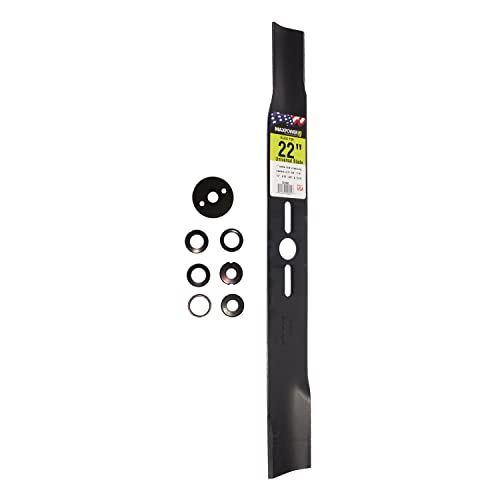
Maxpower 331050 Universal Replacement Lawn Mower Blade (22-inch)
A fresh, sharp blade gives clean cuts during summer stress; dull blades tear grass, increase moisture loss, and open wounds for brown patch. Includes adapter washers to fit most walk-behind mowers. Confirm your deck size and center-hole shape before buying, since fit on universal blades varies.
Confirm Root-Zone Moisture
The deep-infrequent strategy depends on knowing whether the root zone is actually moist, both to avoid overwatering (which feeds disease) and to avoid letting dormant crowns desiccate past the survival window. An instant-read moisture probe takes the guesswork out.
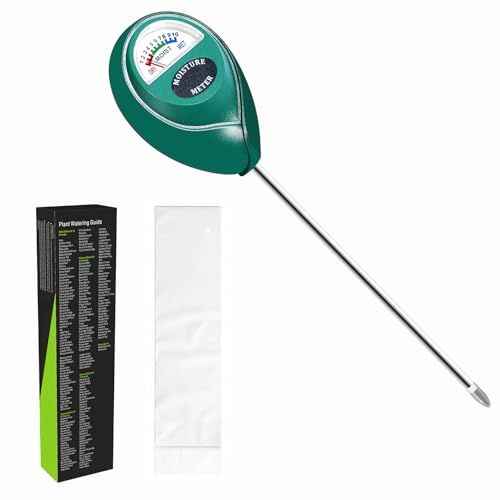
XLUX Soil Moisture Meter (no batteries)
Instant-read probe that confirms the root zone is moist before and after watering, so you deliver deep infrequent irrigation without overwatering into disease or drying dormant crowns to death. With 60,000-plus ratings and a durable steel probe, it pairs naturally with a soil thermometer for summer monitoring.
A soil thermometer is the companion tool that tells you which side of the dormancy thresholds you are on. The full buying and use guide is at the soil thermometer guide.
Common Summer Stress Mistakes
These errors turn a recoverable brown lawn into a dead one. Every one comes from treating summer like a problem to fix rather than a season to ride out.
Breaking dormancy repeatedly. Each time you water a dormant lawn just enough to green it up, then let it brown again, the plant spends reserves restarting growth it cannot sustain. This cycle is more lethal than leaving it dormant. Either commit to keeping it dormant (a survival drink of about 0.2 inch every two to three weeks per the University of Illinois) or keeping it green (consistent 1-1.5 inches a week). Do not flip-flop.
Fertilizing with nitrogen. The most common well-intentioned mistake. Purdue is explicit: no nitrogen on cool-season turf in summer heat.
Light daily watering. It feels diligent and is exactly wrong, keeping roots shallow and blades wet, the two conditions that most increase heat and disease vulnerability.
Mowing too short or mowing dormant turf. Short mowing produces shallow roots; mowing dormant brown grass damages crowns. Mow tall, and stop mowing once the lawn is fully dormant.
Heavy traffic on stressed turf. The University of Illinois is clear: limit traffic of any type on a drought-stressed or dormant lawn, because mowing, foot traffic, and equipment all damage crowns and stems. Recovery typically takes 10 to 14 days once moisture returns, and traffic resets that clock.
The cardinal rule of cool-season summer is to choose green or dormant and stay there. Green means 1-1.5 inches per week, every week, no exceptions. Dormant means a 0.2-inch survival drink every two to three weeks to keep crowns alive, and otherwise hands-off. The lawns that die are the ones whose owners keep changing their minds.
Monitoring: Dormant Versus Dead, and When to Verify
The final skill of summer lawn care is reading what the lawn is telling you, so you neither panic over a dormant lawn nor ignore a dying one.
The Tug Test and Crown Check
When a lawn browns, the question is always dormant or dead. The diagnosis, corroborated across multiple turf sources, comes down to a few checks. Dormant grass resists the tug test, has firm whitish-green crowns, and browns evenly across the lawn. Dead grass pulls up easily, has brown, mushy, or brittle crowns, and appears in distinct patches rather than uniformly. The most reliable confirmation is time: after 7 to 10 days of consistent watering, dormant grass slowly greens up while dead grass shows no improvement.
The mechanics are extension-backed. University of Illinois Extension confirms the crown can survive up to about three weeks without water, and as little as 0.2 inch of rain or irrigation rehydrates crowns to keep them alive. An evenly brown, firmly rooted lawn within three weeks of its last meaningful moisture is almost certainly dormant, not dead.
Recovery Timelines by Grass
Once cooling or rain returns, recovery is not instant. As a rough guide from turf sources: bermudagrass greens up in 7 to 10 days, St. Augustine in 10 to 14 days, and Kentucky bluegrass and tall fescue in about two weeks. The University of Illinois puts general drought-dormancy recovery at roughly 10 to 14 days once moisture returns. Treat these as typical ranges, not guarantees; a lawn stressed deep into the dormancy window recovers slower than one caught early.
Use Soil Temperature to Time Your Exit From Summer Mode
The cleanest signal that summer stress is ending is the soil reading itself. As 2-inch soil drops back below the mid-70s and stays there, cool-season grasses re-enter their growth window and it becomes safe to resume normal care, including the late-summer and fall nitrogen that Purdue recommends for the bulk of annual feeding. That same signal drives fall renovation timing, so monitoring it through August pays off twice.
Verify the lever
Track your soil temperature through summer
Enter your city or ZIP code to watch real-time 2-inch soil temperatures from the nearest USDA or NOAA station, so you know when your lawn crosses into dormancy and when it is safe to feed and overseed again.