
Quick Answer: When Should You Stop Mowing?
Stop mowing cool-season grass once your 2-inch soil temperature sustains about 45°F and top growth has clearly stopped, which lands the final cut near 2 to 2.5 inches via gradual steps. Stop warm-season grass once soil holds below roughly 55°F and growth ceases, with full dormancy near 50°F.
Quick Answer
Check your local soil temperature right now
Enter your city or ZIP code to see real-time 2-inch soil temperatures from the nearest USDA or NOAA monitoring station, and find out whether your lawn has hit the stop-mowing threshold yet.
The last mow of the year does more work than any single cut in summer. It sets how the lawn rides out winter, how fast it greens up in spring, and whether snow mold, vole runs, or winter desiccation show up when the snow melts. Most homeowners either quit too early and let the grass go into winter too long, or panic-scalp the lawn thinking short grass is "cleaner" for winter. Both are wrong, and both cost you in March.
The fix is not a date on the calendar. Soil temperature drives when cool-season and warm-season turf actually shut down, and soil lags air temperature and the first frost by one to three weeks. This guide pulls growth thresholds from Penn State Extension, Rutgers, and the University of Georgia, final-cut-height guidance from Kansas State and the University of Minnesota, and leaf-and-frost rules from Purdue and Michigan State. It tells you what to watch in the ground, how low to go on the last cut, and how to clear leaves so snow mold never gets a foothold.
How Grass Growth Shuts Down in the Fall
Grass does not stop growing on a calendar date. It stops when soil temperature falls below the range its roots and shoots need to function. Get the biology right and the timing follows.
Cool-Season Turf: Roots Outlast Shoots
Cool-season grasses (Kentucky bluegrass, tall fescue, perennial ryegrass, fine fescue) run two growth engines at different temperatures. Penn State Extension (cool-season physiology): shoot or leaf growth is optimal at 60 to 75°F, while root growth is optimal between 50 and 65°F. Roots can still grow below 50°F, but growth slows dramatically as soil approaches freezing at 32°F, and root growth is greatest in spring and fall and much reduced in summer and winter.
That split is why fall matters so much. While the top of the plant slows, the roots are still working in that 50 to 65°F band, storing the carbohydrates that fuel winter survival and spring green-up. Rutgers Center for Turfgrass Science: most cool-season turfgrasses produce their best root growth at 50 to 65°F soil, which is why fall is the peak period for root development and the standard window for the final winterizer application.
Practically, top growth keeps you mowing until soil at 2 inches settles near 45°F. Below that, leaf production nearly stops, the clippings get sparse, and you have reached the end of the mowing season.
Warm-Season Turf: A Hard Stop at Dormancy
Warm-season grasses (bermudagrass, zoysia, St. Augustine, centipede) behave differently. They build a true dormant state and shut down completely. Growth slows as soil temperatures fall below about 55°F and the lawn enters dormancy near 50°F. Because growth nearly stops in that window, bermuda and zoysia lawns generally do not need mowing through the winter.
The fall thresholds mirror the spring ones. University of Georgia CAES: warm-season grasses break dormancy and resume growth as soil climbs into the mid-50s to mid-60s°F at 2 to 3 inches depth, and bermudagrass typically transitions out of dormancy around 60 to 65°F. The same 55 to 60°F band that wakes the lawn in spring is the band where it goes to sleep in fall.
Some guidance lists 60°F as the warm-season stop point. Treat that as the conservative trigger to start your final-cut routine, not the dormancy line. The turf literature centers on growth slowing below about 55°F and full dormancy near 50°F. Begin watching at 60°F, make the final cut as growth visibly stops near 55°F, and the lawn will brown out and hold near 50°F. On the city pages that same 50 to 60°F band at 4 inches is what dates the warm-season slowdown: watching starts at 60°F and dormancy sits at 50°F.
Soil Lags Air, So "Stop Mowing" Follows the First Frost
The first frost is a useful warning, but it is not the stop signal. Soil holds heat longer than air, so the 2-inch soil temperature lags the first fall frost by roughly one to three weeks. That means top growth often limps along for a couple of weeks after your first frost, and you will usually take one or two more cuts before the grass quits. This is exactly why a soil reading beats a frost date. The frost tells you the end is near; the soil tells you it has arrived.
The Stop-Mowing Soil Temperature by Region
Use the table below as a planning estimate, then confirm with your actual soil reading. The triggers are derived from first-fall-frost climatology (Old Farmer's Almanac and NOAA frost-date relationships) cross-referenced with cool-season and warm-season growth thresholds from Penn State, Rutgers, and UGA. Actual dates shift by two to three weeks year to year, and soil lags the first frost by one to three weeks.
Cool-Season Stop-Mowing Window by Zone
Cool-season trigger: soil sustains roughly 45 to 50°F and top growth ceases.
| USDA Zone | Region examples | First fall frost | Last mow (approx.) |
|---|---|---|---|
| Zone 3 | Upper Midwest, N. Plains, N. New England | Early-mid Sept | Early Oct |
| Zone 4 | Upper Midwest, Mountain West, N. New England | Mid-late Sept | Mid Oct |
| Zone 5 | Midwest, Great Lakes, NE, mid-Atlantic uplands | Early-mid Oct | Late Oct-early Nov |
| Zone 6 | Mid-Atlantic, Ohio Valley, lower Midwest, PA | Mid-late Oct | Early-mid Nov |
| Zone 7 | Transition zone, NC/TN uplands, OK | Late Oct-mid Nov | Mid-late Nov |
| Zone 8 (PNW / coastal) | Pacific Northwest, mild transition | Variable / mild | No hard stop; mow on growth |
The University of Minnesota Extension benchmark of "around the end of October" lands in the Zone 4-5 band.
Warm-Season Stop-Mowing Window by Zone
Warm-season trigger: soil sustains below roughly 55°F (growth slows), dormant near 50°F. A slightly lower final cut is acceptable.
| USDA Zone | Region examples | Growth stops (approx.) | Last mow (approx.) |
|---|---|---|---|
| Zone 7 | Transition: bermuda/zoysia | Late Oct-mid Nov | Early-mid Nov |
| Zone 8 | Lower South: GA, AL, MS, TX, Carolinas Piedmont | Mid-late Nov | Late Nov (brown by early Dec) |
| Zone 9 | Gulf Coast, Central FL, S. TX, S. AZ | Slows, may not fully dormant | Final tidy-up in Dec |
| Zone 10-11 | S. FL, S. TX coast | Near year-round growth | No true dormancy stop |
South-facing slopes, areas near pavement or foundations, and full-sun spots warm faster in spring and keep growing later in fall. Mow those areas longer. North-facing slopes, shade, and low frost-pocket spots cool and frost first in fall and green up last in spring. Stop mowing them sooner and resume later. Frost forms first in low-lying areas, so delay morning mowing there until the frost melts.
How Low to Cut: The Final-Mow Height Debate
This is where homeowners go wrong most often, and where extension guidance genuinely splits. The good news: the camps agree on the rules that matter.
The "Keep Normal Height" Position
Kansas State University Turf takes the conservative line: the last mowing of the year should be done at the normal mowing height, neither cut excessively short nor allowed to become excessively long going into winter. K-State puts recommended cool-season heights at 2 to 3 inches for fine and tall fescue, perennial ryegrass, and Kentucky bluegrass. The logic is crown insulation. A normal-height canopy protects the crowns from desiccation and temperature swings.
The "Step Down for the Last Few Cuts" Position
University of Minnesota Extension favors gradually reducing mowing height to about 2 to 2.5 inches for the last few cuttings of the year. The payoffs: lower risk of snow mold in spring, easier leaf raking, and reduced damage from burrowing rodents like voles that tunnel under tall matted grass. UMN also says to continue mowing until the grass stops growing, generally around the end of October in Minnesota, and never cut more than one-third of the plant height in a single cutting while stepping down.
Reconciling the Two: It Is Only Half an Inch
The disagreement is about 0.5 inch of final height, and both camps agree on the rules that prevent damage:
- No scalping and no single drastic drop. Going from 4 inches down to 2.5 in one cut stresses the plant badly.
- Never violate the one-third rule. Removing more than one-third of the blade at once can cause root growth to cease during leaf regrowth, per K-State.
- The reduction must be gradual, spread across the last few mows.
The practical answer for cool-season turf: land around 2 to 2.5 inches through gradual steps, and never scalp. For warm-season turf, a slightly lower final cut is more clearly endorsed, because the lawn goes fully dormant and a lower height plus leaf removal reduces matting and snow mold pressure.
According to Kansas State University Turf, scalping removes the healthy leaf canopy and exposes crowns, dead leaves, or bare soil, leaving turf brown and stubbly, and severely scalped areas may not recover. A short canopy also stops suppressing weeds, so crabgrass and others germinate in the thinned areas the next spring. Keeping grass roughly 2 to 4 inches helps suppress crabgrass. If you want to know how the canopy interacts with weed pressure, see our guide to pre-emergent vs post-emergent.
Final-Mow Height by Grass Type
| Grass type | Summer height | Final-cut target | Direction |
|---|---|---|---|
| Kentucky bluegrass | 2.5-3.0 in | 2.0-2.5 in | Step down gradually |
| Tall fescue | 3.0-3.5 in | 2.5-3.0 in | Step down gradually |
| Perennial ryegrass | 2.5-3.0 in | 2.0-2.5 in | Step down gradually |
| Fine fescue | 2.5-3.5 in | 2.5-3.0 in | Step down gradually |
| Bermuda | 1.0-2.0 in | 1.0-1.5 in | Slightly lower OK |
| Zoysia | 1.5-2.5 in | 1.5-2.0 in | Slightly lower OK |
| St. Augustine | 3.0-4.0 in | 3.0-3.5 in | Hold near normal |
Heights reconcile Kansas State Turf (normal-height position) with University of Minnesota Extension (step-down position). Every reduction stays inside the one-third rule.
Leaf Removal: The Snow Mold Problem
After mowing height, fallen leaves are the biggest threat to winter turf health. They are also the most common thing homeowners get lazy about, and the consequences land in spring.
Why a Leaf Mat Wrecks the Lawn
Purdue University (Plant and Pest Diagnostic Lab): heavy leaf debris left on lawns through winter thins turf by preventing light from reaching the grass and makes lawns more susceptible to snow mold. Michigan State University Extension is blunter: a mat of leaves left over winter will smother the turf, slow spring green-up, and may result in more snow mold, so leaves should be removed or mulched promptly during snow-free conditions.
Snow mold is the specific disease this prevents. It is a cold-weather fungal disease that thrives under a wet, oxygen-starved leaf or grass mat, especially under snow cover. For the full temperature picture on which diseases show up when, see lawn disease by temperature.
Mulch When You Can, Bag When You Must
You do not have to rake every leaf. Purdue University: mulching leaves with a rotary mower several times through fall removes them without raking or bagging and returns nutrients to the soil, drier leaves mulch more easily, and you should not shred too many leaves in a single pass. Purdue also advises mowing at 3 inches or higher through the growing season and continuing right up to dormancy so late-falling leaves can be mulched, which helps prevent snow mold.
A simple decision rule:
- Light cover (under ~25% of the surface): mulch in place with the mower.
- Moderate cover (~25-50%): mulch in several passes over a few days; let leaves dry first.
- Heavy drifts (over ~50%, or wet matted leaves): bag, rake, or vacuum. Do not try to mulch a thick wet pile in one pass.
Wait for a dry afternoon. Run the mower over the leaves in two or three light passes rather than one heavy one. The goal is confetti-sized pieces that fall down into the canopy and decompose, not a layer of half-shredded leaves sitting on top of the grass. If you can still see whole leaf shapes after a pass, the pile was too thick.
Equipment for Fall Leaf Cleanup
The right tool depends on leaf volume and whether you want to collect or return the leaves to the soil. Your mulching mower is the no-extra-cost default for routine leaf return. Beyond that, three tool types cover the rest.
For homeowners dealing with heavy drifts who want to clear and shred in one motion, a combination blower, vacuum, and mulcher handles the job without a dedicated bagger.

WORX WG512 TRIVAC 3-in-1 Electric Blower / Mulcher / Yard Vacuum
An all-in-one for homeowners who want to clear and shred fall leaves without a mower bagger. The 600 CFM blower, metal impeller, and 16:1 mulch ratio cut your bag count sharply on heavy drifts, and it switches from blow to vacuum without tools.
If you bag or rake leaves and want to turn them into mulch or compost rather than send them to the curb, a dedicated stationary shredder pairs perfectly with the mulch-do-not-bag guidance.
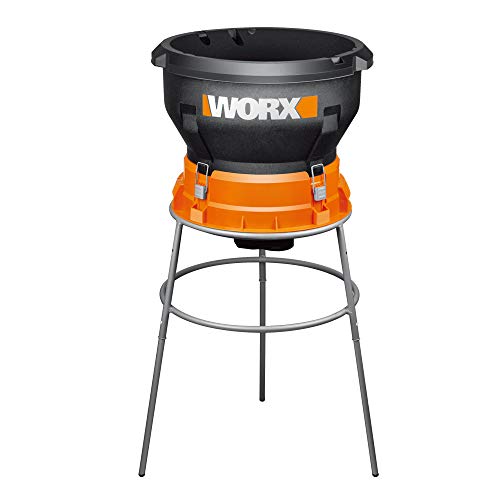
WORX WG430 Electric Leaf Mulcher / Shredder
A stationary shredder that turns raked or bagged leaves into mulch and compost at an 11:1 reduction. The best match for the mulch-over-bag approach when you want finished leaf mold for beds and the lawn instead of bags at the curb.
For small yards, or for finishing edges and beds after mulch-mowing the open areas, a large-head manual rake is still the simplest tool.

Fiskars XL Leaf Rake
A lightweight rake with an oversized head for clearing leaves fast in yards too small to justify a vacuum. Useful for finishing edges, fence lines, and beds after you mulch-mow the open lawn. No power, no maintenance, no noise.
Timing the Winterizer After the Final Mow
The last fall fertilizer is the payoff for all that root activity happening in cool soil. Time it right and it builds the lawn that greens up first in spring.
Apply After the Final Mow, Not Before
Apply winterizer after the final mow, not before. Rutgers Center for Turfgrass Science: cool-season turf produces its best root growth at 50 to 65°F soil, which is why fall is the standard window for the final fertilizer. The nutrients go to root storage rather than top growth when the shoots have already slowed.
The timing trap is forcing growth right before snowfall. Michigan State University Extension: lush, actively growing turf going into winter should be avoided, so nitrogen applications should be timed so stimulated growth does not occur near snowfall. A late, heavy nitrogen hit produces soft, succulent leaf tissue that mats and feeds snow mold. The goal is roots, not a green flush.
For the full feeding calendar, see cool-season fertilization schedule. Warm-season lawns follow a different curve covered in warm-season fertilization schedule.

Scotts Turf Builder WinterGuard Fall Lawn Food (32-0-10), 5,000 sq ft
A common consumer winterizer applied after the final fall mow to build roots for spring, covering about 5,000 sq ft. Note that extension sources stress timing the nitrogen before growth stops, so apply it while roots are still active in cool soil, not after a hard freeze.
How It Fits Your Last Cut
Make your final mow at the stepped-down height while growth is still trickling. Clear or mulch the leaves. Then apply the winterizer while soil is still in or near the 50 to 65°F root-growth band, before the ground freezes. That sequence gets nitrogen into actively growing roots without pushing the soft top growth that invites disease.
Frost and Frozen Ground: When Not to Mow
The single fastest way to damage the lawn during the final-mow window is to run the mower at the wrong time of day, on frosted blades.
Frost Shatters Leaf Blades
USGA Green Section research: mowing or trafficking frost-covered turf is damaging because ice crystals on the leaf blades act like blades and puncture leaf cells when pressure is applied. In research on cool-season turf, morning soil temperature was the best predictor of injury, with unacceptable injury occurring when morning temperatures were below 32°F. Avoid mowing right before an expected frost, and wait until the frost has melted.
Purdue University reinforces it: avoid mowing, leaf removal, or other maintenance on frost-covered or frozen turf, because equipment damages the grass under those conditions.
The Practical Rule
In late fall the morning frost-melt window matters. Mow in the afternoon once the frost has burned off and the surface has firmed. Skip the morning entirely if a hard frost is forecast and the lawn will not thaw. If the ground is frozen solid, the mowing season is over; switch to spring cleanup planning. Frost-pocket and shaded spots thaw last, so leave those for the warmest part of the day.
Footprints and tire tracks on frosted grass turn into brown trails that show up for weeks. If you can see frost on the blades, or the ground crunches underfoot, stay off it. Wait for thaw, dry conditions, and a firm surface before the final cut.
Spring: When to Resume Mowing
The same soil-temperature logic that ends the season starts it again. Do not let the calendar or a warm afternoon trick you into the first cut too early.
Cool-Season Resume Thresholds
Resume cool-season mowing when soil sustains roughly 45 to 50°F and you see active green-up and visible growth. Approximate timing by zone: Zone 3-4 around mid-to-late April, Zone 5-6 around early-to-mid April, and Zone 7 around late March. The first cut should be at normal height. Do not scalp to "remove dead winter growth." The brown material is dormant tissue that greens from the base as soil warms. If you plan to overseed thin areas, time it against soil temperature using spring overseeding for cool-season grass.
Warm-Season Resume Thresholds
Resume warm-season mowing when soil holds 60 to 65°F at 2 to 3 inches with visible green-up. University of Georgia CAES: bermudagrass typically transitions out of dormancy around 60 to 65°F, and full green-up follows roughly 3 to 6 weeks after soil holds 65°F. Approximate timing: Zone 9 around mid-to-late March, Zone 8 around early-to-mid April, and the Zone 7 transition zone the latest, around mid-to-late April into early May.
According to University of Georgia CAES, warm-season fertilizer should be withheld until soil reaches 65°F to avoid triggering premature green-up that a late freeze can damage. A nitrogen push during a warm spell in March can force tender growth that a late cold snap then kills, setting back the whole lawn. Wait for the soil to confirm spring before you feed.
Verify the Lever in the Ground
Air temperature lies in both directions. A warm March afternoon does not mean the soil has reached the resume threshold, and an October cold snap does not always mean growth has stopped. Measure soil at 2 to 3 inches deep, mid-morning, in a representative open area away from pavement, and watch the trend over 5 to 7 days before you act. A soil thermometer is the cheapest tool that pays off here; see our soil thermometer guide for how to read and place one. For the broader off-season picture, winter dormancy care covers what the lawn needs once mowing stops.

Instant-Read Soil Thermometer
A probe thermometer for reading soil at the 2 to 3 inch depth where growth and dormancy are decided. The one tool that turns guesswork about the final mow and spring resume into a real measurement. Read mid-morning and track the trend over several days.
Verify the lever
Track your stop-mowing soil temperature
Enter your city or ZIP code to monitor real-time 2-inch soil temperatures from the nearest USDA SCAN or NOAA USCRN station, so you know exactly when growth has stopped and when it resumes.
Common Mistakes to Avoid
These are the errors that turn an easy final mow into a thin, mold-streaked spring lawn.
- Quitting on the calendar instead of the soil. Growth often continues a week or two past the first frost. Mow until soil settles near 45°F (cool-season) and growth visibly stops.
- Scalping for "winter cleanliness." A short canopy exposes crowns, invites crabgrass into the thinned turf, and does not help anything. Step down gradually to 2 to 2.5 inches, no lower for cool-season.
- Dropping height in one cut. A single drop from 4 inches to 2.5 violates the one-third rule and stalls root growth. Spread it over the last few mows.
- Leaving leaves on the lawn. A mat blocks light, traps moisture, and feeds snow mold. Mulch in thin dry passes or bag the heavy drifts.
- Mowing on frost. Frosted blades shatter and the tracks brown out for weeks. Wait for afternoon thaw.
- Fertilizing into a green flush. A late heavy nitrogen hit produces soft tissue that mats under snow. Time the winterizer to feed roots, not shoots.
- Mowing dormant warm-season turf. Once bermuda or zoysia is brown and dormant near 50°F soil, it does not need cutting. Put the mower away.