
Quick Answer: Start with the Season You Moved In
If you bought the house in fall, you got lucky. Run the full renovation playbook now.
If you bought it in spring, summer, or winter, the real renovation is in September. Spend this season setting up that work.
Skip to the section that matches when you took over: spring move-in, summer move-in, fall move-in, or winter move-in.
Get Local Timing
See your soil temperature and your city's schedule
Enter your ZIP to check soil temperatures from the nearest USDA monitoring station and get a personalized 12-month schedule for your city.
This guide is for cool-season lawns: Kentucky bluegrass, fescue, perennial ryegrass, and the cool-season blends common across the Northeast, Upper Midwest, transition zone, and Pacific Northwest. If you have St. Augustine, centipede, bahia, bermuda, zoysia, or carpetgrass, stop here. Different chemistry, different timing, different playbook. A warm-season version of this guide is on our roadmap.
You're on the cool-season guide. The cool-season chemistry and timing in this guide can damage warm-season turf. Different grasses follow different rules. The warm-season version of this guide is a planned follow-up; in the meantime, see When to Apply Broadleaf Weed Killer on Warm-Season Lawns in Spring for the warm-season chemistry baseline.
What Lawn Renovation Actually Costs
The landscaper-quote sticker shock is real. A pro renovation on a 1/4-acre lot runs $3,000 to $8,000 once you add labor, equipment, and a markup on materials.
DIY at $265 to $787 in the first year gets you most of the way there if you do the work in the right season. The trade-off is your time and a willingness to learn what works.
Year one is not "perfect lawn." Year one is "stop the bleeding and build the foundation for year two." The three budget tiers later in this guide are anchored to that goal: $265 absolute floor, $397 do-it-right, $787 fully equipped.
Step Zero: Stop Whatever You Were About to Buy
Before you spend a dollar, push back on the most common mistakes new homeowners make. The lawn-care subreddits and the Home Depot aisle both push the same five bad answers.
Don't reach for Roundup yet. "Nuke it and start over" is the most upvoted single piece of advice on r/lawncare and it's the most over-applied. Half of your existing lawn might be salvageable. Identify what you have first. The "I killed the lawn, now what?" follow-up post is a predictable consequence of skipping the diagnostic step.
Don't buy Scotts EZ Seed. The bag is mostly mulch filler with low-quality seed. Real bagged seed costs the same per pound and works.
Don't till the yard. Tilling brings buried weed seeds to the surface and damages soil structure. The "starting over by tilling" approach produces a worse weed problem the following year.
Don't put down landscape fabric in turf areas. It tanks soil health and only stops shallow weeds. Landscapers who actually do turf work consistently warn against it.
Don't buy a four-bag Scotts seasonal program. A $100 product that does the wrong thing in the wrong season costs more than $30 of the right product applied at the right time.
Step One: Spend $20 on a Soil Test
This is the single biggest gap between online lawn-care advice and what university extensions actually recommend. New homeowners almost never order a soil test before buying products. They should.
A cooperative extension soil test tells you four things that determine the rest of your renovation:
- Soil pH. Cool-season grass wants 6.0 to 7.0. Below 6.0, lime is the highest-leverage amendment. Without a test, you're guessing whether to apply lime, how much, or whether you'd be applying it for nothing.
- Phosphorus and potassium levels. This determines whether your starter fertilizer should be 18-24-12, 24-25-4, or something else. Buying a starter fertilizer without knowing your P levels is throwing money at a guess.
- Lime requirement (in actual pounds). A test gives you a specific pounds-per-1,000-sq-ft recommendation, not "apply lime if needed."
- Organic matter and CEC. These tell you whether the soil holds water and nutrients well. Compacted, low-OM soil needs aeration and topdressing more than it needs another bag of fertilizer.
State extension lab pricing as of 2026:
- Penn State Agricultural Analytical Services Lab: $10 per sample, mailed in.
- University of Maryland Extension: $20 per sample.
- UMass Soil & Plant Nutrient Testing Lab: $20 per sample.
- NC Department of Agriculture: free April through November, $4 December through March.
- Ohio State Extension: $15-$25 per sample (varies by county).
Other states are in the same $10-$25 range. Search "[your state] extension soil test" or visit your state's land-grant university extension website.
Turnaround is 2 to 4 weeks. If you took over the lawn in spring, mail the sample now and the results come back in time to inform fall renovation. If you took over in summer, the test arrives in time to plan September. If you took over in fall and the lab is busy, results may not arrive in time to inform this year's seeding; in that case, seed first and apply lime later.
DIY pH-and-NPK test kits ($10-$20 from any big-box) are not a substitute. They test pH reasonably well but are unreliable for P and K. Skip them.
If you'd rather skip the state-lookup step entirely, a mail-in commercial lab kit gives you the same kind of report with a faster turnaround and no need to identify which state lab takes mail-in samples in your area:

MySoil Soil Test Kit
13 nutrients + pH · Results in 6-8 days · Mail-in lab
While you're equipping yourself, a soil thermometer is the other $15 tool worth buying. It's the best way to confirm pre-emergent timing in spring and seeding timing in fall.

Soil Thermometer (instant-read probe)
Insert 2-3 in deep · Read mid-morning · Away from pavement
The Pre-Emergent and Overseeding Trap
This deserves its own section because it's the single most common mistake spring move-in homeowners make. Standard pre-emergents (prodiamine, dithiopyr, pendimethalin) prevent weed seeds from germinating. They do not distinguish between crabgrass seed and grass seed. Apply prodiamine in April and you cannot overseed for 8 to 16 weeks.
There's exactly one homeowner-grade workaround for spring: siduron (sold as Tupersan). Iowa State, Missouri, Rutgers, and UConn all cite siduron as the pre-emergent that's safe at seeding. It controls crabgrass for about 5 weeks without damaging cool-season grass seed germination. It's the only pre-emergent labeled "as the final operation after seeding."
The other workaround is mesotrione (sold as Tenacity, or as the cheaper generic Atticus Torocity). Mesotrione has both pre- and post-emergent activity and is safe to apply at seeding for cool-season turf. It gives roughly 28 to 30 days of weed suppression while your seed germinates.
If you're doing any spring patch seeding, use siduron or mesotrione. Skip prodiamine and dithiopyr until your seeded patches have been mowed three times.
The Four Season-Branched Action Plans
Four entry points based on when you took over the lawn. Read the section that matches your situation; skip the others.
5a. Spring move-in (Mar-May)
The honest framing: you have 60 to 90 days to do triage, not full renovation. The big work belongs to September. Your spring budget mostly funds the fall project.
The three highest-impact actions:
- Pull a soil test in your first two weeks. Mail the sample now so results arrive in time to inform your September seeding and any lime application this summer.
- Decide whether to apply spring crabgrass pre-emergent, and accept the trade-off. Pre-emergent goes down when 4-inch soil temps hit 50 to 55°F (forsythia bloom is the field cue). If you apply standard pre-emergent in April, you cannot overseed bare patches that spring. Either skip the pre-emergent and patch-seed with siduron, or apply pre-emergent and wait until fall to overseed. Don't try both. The full timing breakdown lives in our pre-emergent guide.
- Spot-treat broadleaf weeds in late April or May, once the lawn has fully greened up and air temps are in the 65 to 85°F range. Below 55°F the weeds aren't actively translocating; above 85°F cool-season turf gets injured. The chemistry and full timing live in our spring broadleaf guide.
What to skip until fall:
- Heavy fertilization. Minnesota: don't apply nitrogen early in spring; wait until grass is actively growing, usually mid-May. Michigan State: May is the first fertilizer month, not before. The fall N application matters more than the spring one.
- Full kill-and-reseed renovation. Spring renovation has to fight summer heat 90 days later. Seedling tall fescue or KBG that hasn't rooted deeply by June will die in July.
- Aeration as a renovation step. Cornell, Iowa State, and UMass all put core aeration in the late summer slot tied to overseeding. Spring aeration relieves compaction but the high-impact aeration-plus-overseeding combo belongs to August-September.
Common new-buyer mistakes in spring:
- Applying standard pre-emergent in April, then trying to overseed bare patches in May. The seed germinates at 0% under prodiamine. Either pre-emergent or overseeding, not both.
- Spraying broadleaf herbicide on day 1 before the lawn has greened up. Translocation requires active growth.
- Buying contractor-grade Kentucky bluegrass seed and trying to establish it in April. KBG takes 14 to 30 days to germinate and won't survive its first July without deep roots.
- Treating spring as "the renovation season" because Memorial Day weekend feels like lawn time. Plan the renovation for September; spend the spring budget on a soil test, a sharp mower blade, and siduron plus seed for the worst patches.
For the patch seeding itself, Pennington K31 in the bulk 40-lb bag is the floor-tier seed:

Pennington Kentucky 31 Tall Fescue (40 lb Penkoted)
Drought-tolerant tall fescue · 40 lb ~ 8,000 sq ft overseed · Penkoted
For the seed-safe pre-emergent, mesotrione (generic Torocity) is the budget pick:
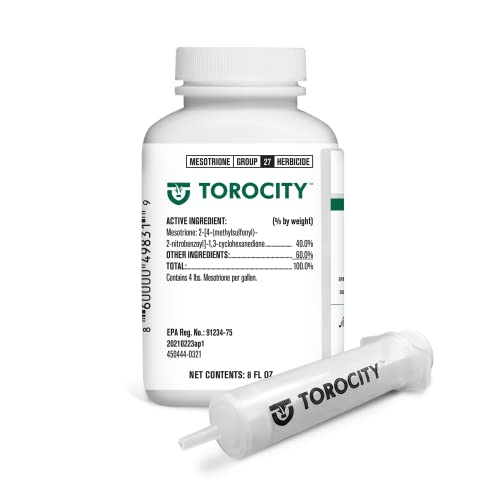
Atticus Torocity Herbicide (8 oz)
40% mesotrione · Safe at seeding · 8 oz treats ~1 acre
Time-to-results for spring move-in:
- Patch seeding: visible green in 2 to 3 weeks (perennial ryegrass or tall fescue), 3 to 4 weeks (Kentucky bluegrass). Full fill-in: 6 to 8 weeks if water holds.
- Broadleaf control: 7 to 14 days for visible curl on dandelion and clover. Hard-to-kill perennials (ground ivy, wild violet) need a second application 4 weeks later, with the second one usually more effective in fall.
- The real renovation result lands in October, not June.
5b. Summer move-in (Jun-Aug)
The worst-case branch. Almost every input you'd want to buy is contraindicated. Cool-season grass is dormant or stressed. Broadleaf chemistry won't apply above 85°F. Pre-emergent windows are closed. New seed won't survive.
The job for the first 60 days is keeping existing turf alive and pre-staging the September renovation.
The three highest-impact actions:
- Pull the soil test in your first week. Lab turnaround is 2 to 4 weeks. A test pulled June 15 returns by mid-July. Lime, P, and K recommendations land in your hands before the August 25 to September 15 seeding window opens. Without this, the September renovation goes in blind.
- Mow tall (3.5 to 4 inches) and mow sharp. Penn State summer guidance: lean toward the upper end during heat. The taller canopy shades the soil surface, drops surface temperature 10 to 15°F, and suppresses crabgrass and broadleaf germination. Sharp blades cut cleanly; dull blades shred and create disease entry points. A blade sharpening costs $5 to $10 at any small-engine shop.
- Water for survival, not for green. Wisconsin and Penn State: ~1 inch per week, deep and infrequent (one or two soakings, not daily light). Early morning, so blades dry before evening. If you can't afford to water all summer, the cool-season turf will go dormant brown in July; that's a survival mechanism, not death. Iowa State: dormant lawns can be soaked once in late August to break dormancy ahead of fall overseeding.
What NOT to do in summer:
- Don't fertilize. Minnesota: "Do not fertilize in hot mid-summer months. This can cause irreversible damage." Pushing nitrogen on dormant or stressed cool-season grass invites disease and burn.
- Don't spray broadleaf herbicide. 2,4-D / dicamba / mecoprop labels cap at 85°F. Cool-season turf injury is the cited risk.
- Don't seed. Even with daily water, July seedlings rarely make it to fall. Tall fescue germination wants soil 60°F+ but air temperatures 68 to 77°F; summer air temperatures are too high.
- Don't skip the soil test. If you push it to September, your fall renovation starts blind.
The big summer setup task: plan the September renovation in detail. Confirm species mix from soil test results and a shade audit (KBG sun, fine fescue shade, tall fescue mixed, perennial ryegrass for fast cover). Source seed by August 1; the good cultivars sell out by Labor Day. Schedule core aeration for late August. Identify perennial broadleaf weeds now and mark them for early-October post-emergent application after the new seed has been mowed twice.
A programmable hose-end timer is the high-ROI summer purchase. Forgetting to water during the August dormancy-break soak can lose the September renovation before it starts:

Orbit B-hyve XD 1-Port Smart Hose Watering Timer
Bluetooth + WeatherSense · IPX-5 weatherproof · Runs on AA batteries
Time-to-results for summer move-in:
You see no improvement until October. The work in June through August is preparation: soil test back, seed in the garage, aeration scheduled, mower deck raised. Real green-up arrives in early November after September seed has tillered.
5c. Fall move-in (Sep-Nov)
The lucky branch. Every high-impact action lines up in your first 60 days. If you closed in early September, you can run the full renovation playbook before Halloween.
The four highest-impact actions:
- Pull the soil test immediately. A September 1 closing means results back by September 15, in time to inform lime application before winter and the spring fertility plan. After mid-October, the seeding window has narrowed; if results don't arrive in time, seed first and apply lime later.
- Overseed or full renovate during your regional optimal window. The windows by region: Upper Midwest (MN, WI, IA) August 20 to September 15; mid-Atlantic and transition (MD, NJ, PA, OH, MO) mid-August to mid-October; New England (MA, NY) August 15 to September 15; transition zone south (NC) September to mid-October. The full how-to lives in our spring overseeding guide, which covers the species, the rates, and the watering cascade. The fall version of that guide is on our roadmap; until it ships, the spring guide is the closest stand-in.
- Aerate before or during overseeding. Cornell, UMass, NC State, and Wisconsin all put core aeration in the August-September slot. Holes capture seed and hold moisture. NC State specifically: tall fescue seedlings come up "as a tuft of turf from the aerification holes." Rent a walk-behind aerator from Home Depot for ~$80 for 4 hours.
- Apply the most important fertilizer of the year: early September nitrogen. Wisconsin recommends ~1 lb N / 1,000 sq ft, controlled-release, around September 1-15. Minnesota: early September, two-thirds of total annual nitrogen. This single fertilization is the highest-impact N application of the year per every northern extension. Drives root development before winter and crowns up the turf for next spring.
Optional fifth action that fits the budget: apply broadleaf herbicide in October, after new seed has been mowed twice. Purdue: "the optimum time to control perennial broadleaves is in October." Cooler conditions (60s and 70s) put 2,4-D / dicamba / mecoprop in the temperature sweet spot, and perennial weeds are translocating sugars to roots in fall, which carries the chemistry where it does the most damage.
For the seed itself, the fully-equipped tier upgrades from K31 to a specialty blend with named cultivars. Jonathan Green Black Beauty Ultra is the lawn community's standard upgrade pick for cool-season turf: a TTTF + Kentucky bluegrass + perennial ryegrass blend with 4-foot root depth and strong drought tolerance, suited for the northern half of the country.

Jonathan Green Black Beauty Ultra Grass Seed (7 lb)
TTTF + KBG + perennial rye · Germinates 7-14 days · 4-ft root depth
If you want all-tall-fescue (no KBG mixed in, faster establishment), Twin City Seed Co.'s Resilience II is a 5-cultivar TTTF blend at a similar quality tier. Available in 25-lb bulk for full-renovation budgets. If you want a self-repairing TTTF that fills bare spots on its own (the only tall fescue with true rhizomes), Barenbrug Turf Saver RTF with the Yellow Jacket coating is the third specialty option.
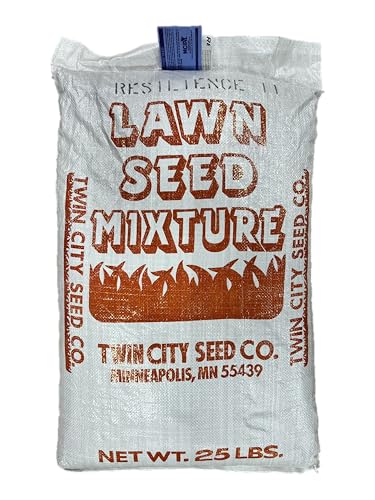
Twin City Seed Resilience II Tall Fescue Mix (25 lb)
5-cultivar TTTF, no KBG · Overseed 6-8 lb per 1,000 sq ft · Germinates 5-10 days
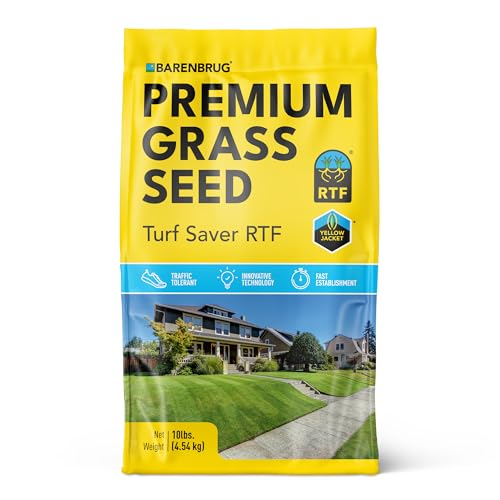
Barenbrug Turf Saver RTF Tall Fescue (10 lb)
Rhizomatous tall fescue · Fills bare spots itself · Yellow Jacket coating
For the starter fertilizer applied at seeding:

Scotts Turf Builder Starter Food for New Grass (15 lb)
24-25-4 starter formula · 15 lb ~ 5,000 sq ft · Pair with mesotrione
For the seed-safe pre-emergent, the brand-name Tenacity is the fully-equipped tier pick (the generic Torocity above works equally well):

Syngenta Tenacity Herbicide (8 oz)
Mesotrione · Pre + post-emergent activity · Safe at seeding
Common new-buyer mistakes in fall:
- Waiting too long. Iowa State and Wisconsin flag late September into October as the late edge for the Upper Midwest. Penn State: avoid seeding after mid-October. New seedlings need 4 to 6 weeks of growth before frost to root in.
- Skipping aeration "because the lawn looks okay." Aeration into existing turf doubles seed-to-soil contact compared to broadcasting on top.
- Applying broadleaf herbicide before the new seed is mowed twice. Most labels (2,4-D, mecoprop, dicamba combinations) damage seedlings under three-leaf stage.
- Mowing too short for the final cut. Wisconsin, Michigan, and Maryland all warn against scalping going into winter; this exposes crowns and encourages snow mold.
Time-to-results for fall move-in:
- Visible germination: 7 to 14 days (perennial rye), 10 to 21 days (tall fescue), 14 to 28 days (KBG).
- Full canopy fill: 6 to 8 weeks. Meaningful coverage by Halloween in most of this footprint.
- Spring green-up the following March: dramatically denser, deeper green than a non-renovated lawn. This is the result the homeowner pays for in September.
5d. Winter move-in (Dec-Feb)
Limited but not nothing. Two real moves plus three planning moves.
The two real moves:
- Dormant-seed thin spots from November through early March. Soil temperature must be below 40°F. Seed sits on the surface, freeze-thaw cycles work it into contact with soil, germination triggers when soil warms above 50°F in spring. Perennial ryegrass leads (germinates above freezing); tall fescue and Kentucky bluegrass follow. Increase seeding rate 30 to 50% over normal spring rates to offset wash-out and bird losses. Don't rake; broadcast and let freeze-thaw do the work. Don't apply standard pre-emergent in spring on dormant-seeded areas; use siduron when growth resumes if crabgrass is a concern.
- Order the soil test by mid-February. A test pulled in February returns by mid-March, in time to inform spring lime application and to plan the fall fertility program. Frozen-soil sampling is fine; let the sample thaw to room temperature before mailing.
The three planning moves:
- Buy seed for spring patching and fall renovation before April 1. Quality cultivars (NTEP top performers) sell out by spring rush. Winter is when retailers carry full inventory at the lowest prices.
- Sharpen mower blades and service the mower. Off-season rates at small-engine shops. A sharp mower from day 1 of mowing season prevents disease entry and reduces stress on already-weak turf.
- Read your regional extension calendar. Penn State "Lawn Management through the Seasons," UMN Lawn Care Calendar, Wisconsin Lawn Care Calendar, Maryland Lawn Maintenance Calendar. Build a 12-month plan that matches your region. The plan, not the panic, is the deliverable.
What NOT to do in winter:
- Walk on frozen turf (Maryland flags this as crown damage).
- Apply de-icing salt to the lawn or driveway runoff areas. Salt damages turf and soil structure.
- Seed when soil is unfrozen and above 50°F. That's not dormant seeding; that's poorly timed spring seeding.
- Apply any fertilizer or herbicide. Cool-season grass is dormant; nothing translocates.
Time-to-results for winter move-in:
Dormant seed visible 2 to 3 weeks earlier than spring-seeded equivalents (typically late March or early April emergence vs late April for spring-seeded). The first real result lands in April. Real renovation is still September.
The Three Reference Budgets
Three budget tiers for a 1/4-acre cool-season lot (~10,890 sq ft). Prices verified against May 2026 retail snapshots. The homeowner already owns a hose, lawn mower, and rake.
Important sizing note: all three tiers assume overseeding (4 lb seed/1,000 sq ft = ~44 lb seed for the lot), not full kill-and-reseed renovation (which needs 8 lb/1,000 = ~87 lb seed and pushes the seed line alone to $200-$240 in the cheap tier). Overseeding is the right path for any lawn with more than 30% existing turf, which is most renovation candidates. If your lawn is below 30% turf and full kill-and-reseed is the right call, add ~$100-$140 to the seed line in any tier.
Note on spreaders: none of the three budgets buy a Scotts EdgeGuard. Scotts spreaders have a documented striping problem (uneven distribution that leaves green/yellow stripes after fertilizer applications) and the Mini's 5,000 sq ft hopper means refilling at least twice per pass on a 1/4-acre lot. The recommended spreader is the Earthway 2150 (~$135, 50-lb hopper, 3-hole drop with side-spread control), the standard homeowner pick that doesn't stripe. The $265 floor and $397 mid tiers both skip the spreader (borrow one, hand-cast 44 lb of seed across an afternoon, or rent at Home Depot for ~$15). The fully-equipped tier includes it.
$265 Floor: The "I just need to stop the bleeding" plan
| Item | Price |
|---|---|
| Pennington K31 bulk seed (40 lb) | $100 |
| Scotts Starter fertilizer (15 lb x 2) | $40 |
| Atticus Torocity (generic mesotrione, 8 oz) | $50 |
| Soil thermometer | $15 |
| 1-gal pump-up sprayer | $25 |
| Sprinkler + mechanical hose timer | $35 |
| Total | $265 |
Deliberately skipped: aeration rental (rake hard before seeding instead), soil test (defer to year two), broadleaf herbicide (Tenacity/Torocity handles enough year one), maintenance fertilizer (starter is enough year one), spreader (borrow, hand-cast, or rent for the day).
If you absolutely cannot exceed $200, drop the pump-up sprayer ($25) and apply Torocity by mixing into a watering can (less precise but workable for one season), and use the cheapest mechanical timer ($15 instead of $25). Lands at ~$220.
$397 Mid: The "do it right the first time" plan
| Item | Price |
|---|---|
| Pennington K31 bulk seed (40 lb) | $100 |
| Scotts Starter fertilizer (15 lb x 2) | $40 |
| Tenacity 8 oz (brand-name) | $67 |
| Soil test (state extension lab) | $20 |
| Aeration rental (4-hour walk-behind at Home Depot) | $80 |
| Soil thermometer + basic timer + sprinkler + pump-up sprayer | $90 |
| Total | $397 |
Deliberately skipped: broadleaf herbicide (year two), maintenance fall fertilizer (end-of-season clearance in year two), spreader (borrow or rent for a single-day rate).
The two real differences from the floor tier: (1) the soil test, the highest-leverage $20 in the budget; and (2) aeration rental, which roughly doubles seed-to-soil contact and is the single biggest reason fall overseeding outperforms spring overseeding.
$787 Fully-Equipped: The "first year, all the right tools" plan
| Item | Price |
|---|---|
| Specialty seed (Jonathan Green Black Beauty Ultra or Twin City Resilience II, ~44 lb at overseed rate) | $280 |
| Scotts Starter fertilizer (15 lb x 2) | $40 |
| Milorganite (32 lb x 2 for full coverage) | $40 |
| Tenacity 8 oz | $67 |
| Soil test | $20 |
| Aeration rental (4-hour) | $80 |
| Earthway 2150 spreader (you keep it) | $135 |
| Pump-up sprayer + soil thermometer + sprinkler + smart hose timer | $105 |
| Broadleaf herbicide (Southern Ag 2,4-D quart, ready for year two) | $20 |
| Total | $787 |
A fully-equipped first year for a 1/4-acre lot, with mid-grade seed and a no-stripe spreader, runs $700 to $750. Most generic "DIY lawn renovation under $500" content underweights tool costs (especially a non-striping spreader) and undersizes seed and fertilizer for the actual lot area.
If $500 is a hard ceiling, drop one or more of: the Earthway 2150 (borrow or rent for ~$15/day, save $135), the smart hose timer (use a basic mechanical at $25, save ~$60), and the second Milorganite bag (skip fall maintenance feed, save $20). Those three drops land at ~$510.
The Earthway 2150 is the spreader pick:

Earthway 2150 Commercial Broadcast Spreader (50 lb)
50-lb hopper · 3-hole drop, side-spread control · 13-in pneumatic tires
For fall maintenance fertilizer, Milorganite is the slow-release organic pick:

Milorganite All-Purpose Lawn Food (32 lb)
6-4-0 slow-release N · Won't burn seedlings · 2 bags per 1/4 acre
The Four Mistakes That Kill New-Buyer Renovations
- Treating spring as the renovation season. The cool-season renovation window is mid-August to mid-October. Spring is for triage; September is for renovation.
- Skipping the soil test. It's $10-$25 and takes 2-4 weeks. Skipping it means spending $100 on lime you don't need or $80 on fertilizer that's the wrong NPK.
- Applying pre-emergent in April and trying to overseed in May. They cancel each other. Either pre-emergent (no overseeding for 8-16 weeks) or siduron / mesotrione plus seed. Don't try both.
- Watering on a feel basis. The right answer is 1 inch per week (rainfall plus sprinkler) split across 1-2 deep sessions, not daily light watering. A programmable hose timer takes the variable out of the equation.
The Schedule Is Where the Personalization Happens
This guide is the playbook. Your city's schedule is the calendar.
Soil temperature drives the timing for every action in this guide: when crabgrass pre-emergent applies (50-55°F at 4 inches), when broadleaf herbicide translocates (60-85°F air, after green-up), when fall overseeding works (60-70°F falling, at 2 inches). We track soil temperature for every city in the country.
Personalized Timing
Get your city's lawn-care schedule
See your full 12-month lawn-care timeline: when each task opens, what to apply, and how it tracks against your local soil temperature data.