
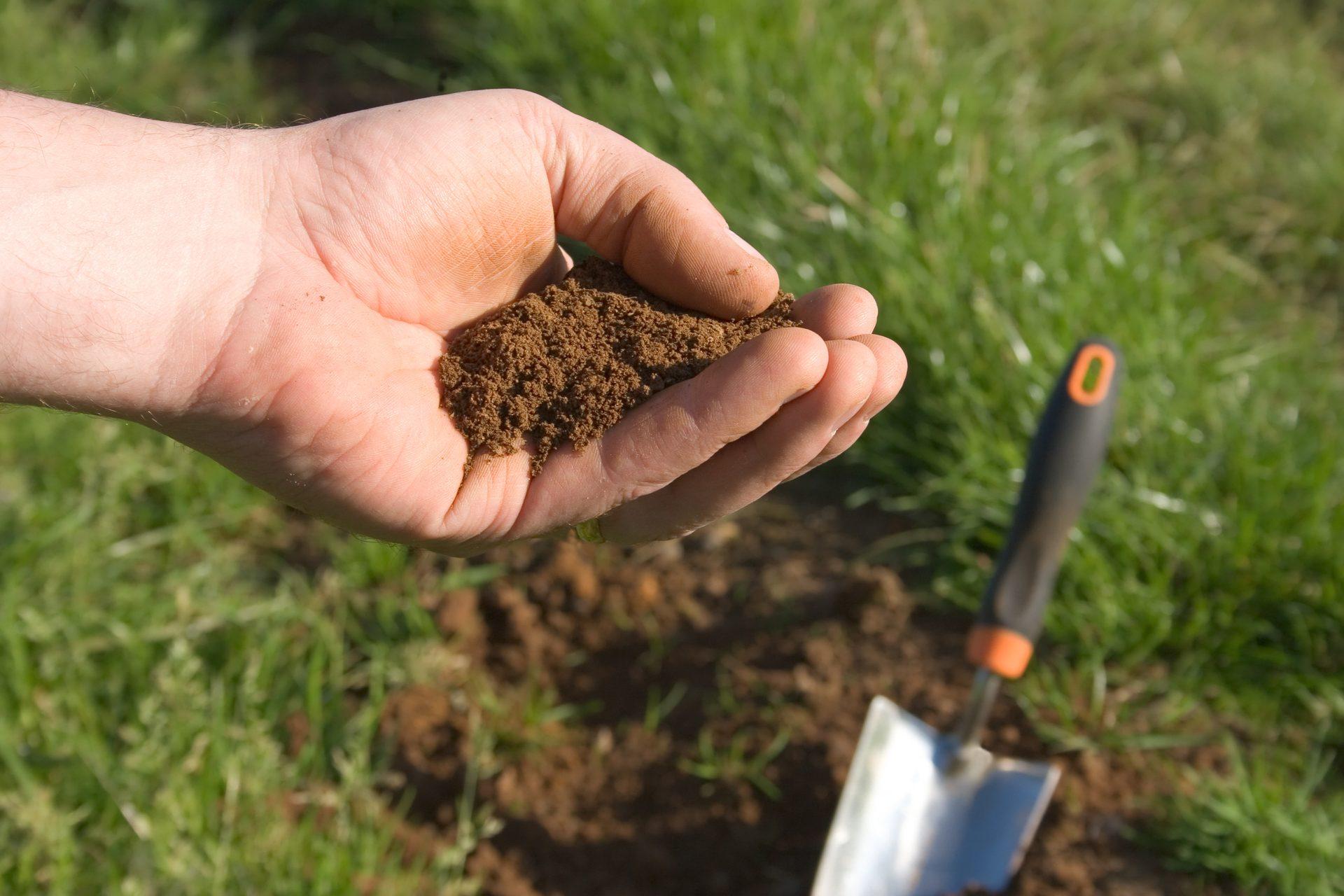
Quick Answer: When Should You Test Your Lawn's Soil?
Test in fall, while the grass is still growing and before the ground freezes, and at least 6 to 8 weeks after the last fertilizer or lime. Take 12 to 15 cores 6 inches deep from each part of the lawn you manage the same way, mix them into one sample, and let the report decide lime, phosphorus and potassium. For most lawns the pH target is 6.0 to 7.0; centipedegrass wants 5.0 to 6.0. Retest about every three years, and every year while you are correcting pH.
What you need
- Mail-in lab test: MySoil soil test kit
Quick Answer
Find your fall soil test window
Enter your city or ZIP code to open your city's page, which links to its lawn care schedule: when the fall soil test opens where you live, and the lime tasks that follow it where lime applies.
Where these figures come from. The timings, depths, rates and ranges in this guide come from university extension soil and turf publications, peer-reviewed soil science, and the state laws that limit lawn phosphorus, all linked in the source list at the end. Where publications give different figures in a way that changes what you would do, the guide names them. Where the guide picks one figure among several, it says so: the 6-inch sampling depth, the single 6.0 to 7.0 pH target, the three-year retest interval, the 50-pound lime cap, Kentucky's magnesium line and when to spray rather than spread iron.
A soil test tells you whether the lawn needs lime and how much, and whether it needs phosphorus or potassium at all. Across University of Minnesota soil tests from 1988 to 2021, lawns and gardens had a median of 68 ppm (parts per million) of phosphorus by the Bray test (one of several lab methods for measuring phosphorus), while 20 ppm is, in the extension's words, "more than sufficient for lawns." Lime spread every year without a test can push soil alkaline, which locks up other nutrients. A test will not diagnose overwatering, poor drainage, compaction, insects or disease; those need a look at the lawn itself.
When to Test Your Lawn's Soil
Fall First
Extension publications that name a preferred season for lawn samples choose late summer or fall, alone or alongside spring, and none rank spring above fall. A fall sample "allows time for corrective pH and nutrient management before new growth starts in the spring," in Virginia Cooperative Extension's words. Lime is why that lead time matters: one application can take up to six months to change pH measurably. Fall is also the most effective season to spread lime, because rain, snow and the freezing and thawing of the soil over winter help work it in.
Wait 6 to 8 Weeks After Fertilizer or Lime
A recent application skews the results. Virginia Cooperative Extension says to wait at least 6 to 8 weeks after any fertilizer or lime before you sample. In fall that usually means sampling before the fall feeding: a sample pulled a month after a September feeding still falls inside that wait.
Skip Frozen or Waterlogged Ground
Do not sample frozen ground; you cannot pull a representative core. Do not sample soaking-wet soil either. Virginia Cooperative Extension's check: if the soil is "good for making mud pies," it is too wet to sample. The frost depth page shows where the ground is frozen today.
Spring Testing and New Lawns
Spring works when fall was missed, and it is the time to test before a spring seeding or renovation. Test early: lime reacts slowly, and University of Georgia Extension advises mixing it into the soil 2 to 3 months before planting where possible. Season also moves the numbers, since early spring samples typically read higher in pH and phosphorus than fall samples. To compare one report with the next, sample in the same season each time.
How Often to Retest
Here the sources disagree in a way that changes your calendar:
- Clemson recommends sampling every year.
- Penn State says every 2 to 3 years on sandy soil and every 3 to 4 years on clay.
- Missouri says every three years on an established lawn, and every year while you are correcting a deficiency or changing pH.
- Minnesota says every three to five years.
We follow Missouri: about every three years for an established lawn, and every year while a pH correction is under way. Three years also matches the soil test age most state phosphorus laws accept (see Phosphorus Laws below). Test sooner when a problem shows up, with one sample from the problem area and one from healthy turf.
How to Take a Lawn Soil Sample
Use a soil probe (a hollow steel tube that pulls a narrow core), a trowel, a shovel or a spade made of stainless steel or chrome-plated steel: brass, bronze and galvanized tools add copper and zinc to the sample. Mix the cores in a clean plastic bucket, never a metal one, and never one that has held fertilizer or lime.
Step 1: Split the Lawn Into Areas
One sample should represent soil that has been treated alike. Keep lawn samples apart from garden beds, and sample the front and back lawn separately if they have been treated differently. For a bad patch, take one sample from the problem area and a separate one from healthy turf so the two reports can be compared. Skip spots that would skew the average: lawn borders, old brush piles or burn sites, pet urine spots, and soil close to driveways or streets.
Step 2: Pull 12 to 15 Cores, 6 Inches Deep
Pull 12 to 15 cores from spots spread across each area, because research behind UMass Extension's turf guidance found it took more than 12 cores to bring a sample's phosphorus within 5 percent of the area's true average.
Push each core 6 inches deep, measured from the soil surface under the grass and thatch. Published lawn depths run from 2 to 6 inches. Six inches is our choice: it is the depth Utah State Extension gives for turf, and the deep end of the 4 to 6 inches that the largest group of turf sampling instructions give, Kansas State's among them. Use the same depth every time, and if the kit or lab you send to gives its own depth, follow it, since its recommendations are set for that depth.
Depth matters because nutrients collect near the surface of a lawn that is never tilled. In New York data, phosphorus in the top inch was 2 to 7 times higher than in the top 6 inches, so a shallower core than last time can make phosphorus appear to rise when none was applied.
Step 3: Strip, Mix, Dry and Bag
Strip the grass, roots and thatch off each core; thatch left in pushes the organic matter reading up. Break up the cores in the bucket and mix thoroughly. UMass Extension's turf guidance says to air-dry the sample within about twelve hours, and never with heat, which changes how soluble the nutrients are. Fill the bag or box to the line marked on it.

MySoil Soil Test Kit
Test before you fertilize. This mail-in lab kit returns pH and 13 nutrients, phosphorus and potassium among them, in 6 to 8 days, with fertilizer recommendations.
Sketch the lawn and note which areas each sample covered and how deep you pulled the cores. The next test should repeat both, so the two reports compare like with like.
Reading Your Soil Test Report
A routine lawn test reports soil pH, a lime requirement or buffer pH, phosphorus and potassium. Most add calcium and magnesium, and some add organic matter, cation exchange capacity and micronutrients.
Soil pH: The Number That Matters Most
Soil pH measures how acid or alkaline the soil is, on a scale of 0 to 14 where 7 is neutral and lower numbers are more acid. It matters most because it controls how much of the other nutrients the grass can take up: Florida's turf soil-testing publication says phosphorus, potassium, calcium, magnesium, boron, copper, iron, manganese and zinc are generally more available between pH 5.5 and 6.5. At pH 5.5 or below, soil can run short of calcium, magnesium and phosphorus while aluminum and manganese rise to levels that can be toxic to grass. Above pH 8.0, nitrogen, phosphorus, iron, manganese, boron, copper and zinc all become less available. The same Florida publication goes further: because field calibrations for the other nutrients do not exist for Florida turfgrasses, it calls using soil tests to manage turf nutrients "other than for pH or salinity" questionable.
What pH Your Lawn Needs
Our target for most lawns, cool-season and warm-season, is pH 6.0 to 7.0, the middle of published turf ranges that run from 6.0 to 6.8 at the narrow end to 6.0 to 7.5 at the wide end. Fine fescues and turf-type tall fescues tolerate slightly acid soil (6.0 to 6.5) better than Kentucky bluegrass does. Two warm-season grasses are exceptions:
| Grass | Target pH |
|---|---|
| Most lawn grasses | 6.0 to 7.0 |
| Centipedegrass | 5.0 to 6.0; do not lime unless a soil test calls for it |
| St. Augustinegrass | Depends on region: 6.5 to 7.5 in Florida's guidance, 5.5 to 6.5 in Georgia's |
Some disease programs set a lower target. Read the spring dead spot and summer patch guides before you lime a lawn that has either disease.
When the Report Calls for Lime
When pH is low, the report gives a lime requirement in pounds per 1,000 square feet or per acre. Where the line falls differs: Missouri calculates lime below pH 6.0, while Maryland calls 6.0 to 6.8 optimum and names lime only below 5.5, so a lawn reading 5.5 to 5.9 gets lime under Missouri's program but falls outside Maryland's lime advice. Follow the rate on your report, and add no lime it does not call for: an alkaline pH above 8.0 is as undesirable as an acid one.
Buffer pH: Why Two Lawns at the Same pH Need Different Amounts of Lime
Soil pH tells you whether the lawn needs lime. The buffer pH (also called the buffer index) tells the lab how much. Soil pH measures only the acid dissolved in the soil water, while far more is held in reserve on clay and organic matter: UMass says neutralizing the dissolved acid in an acre takes 1/8 to 2 pounds of limestone, and neutralizing the reserve takes several tons. The buffer test measures that reserve, which is why pH alone cannot set a lime rate and why clay soils need more lime.
Lime products differ in strength. Ohio State's conversion divides the report's lime requirement by the product's calcium carbonate equivalent, its neutralizing value compared with pure calcium carbonate: a 50-pound recommendation with a product rated at 80 percent comes to about 63 pounds of product (50 divided by 0.80), which is over the 50-pound single-application cap below, so it goes on in two applications.
How Much Lime at Once
Lime can burn established grass, so large amounts are split. Sources cap a single application at different levels:
- 50 pounds per 1,000 square feet: Missouri, Ohio State (pounds of product), Maryland and Georgia
- 70 pounds: UMass
- 100 pounds: Penn State and Kentucky
- 25 pounds of calcitic limestone (ordinary calcium carbonate lime, without magnesium): LSU, for Louisiana lawns
We use 50 pounds, the cap shared by the largest group. Anything larger goes on in applications months apart (see the season plan). Before seeding, the whole amount can go on at once if it is worked into the soil. Use dolomitic lime when the test also shows low magnesium.
Lowering pH With Sulfur
Elemental sulfur lowers pH, slowly: soil microbes have to convert it first, and a large change can take several years. On established turf, keep each application to 5 pounds per 1,000 square feet or less and no more than 10 pounds a year; even 5 pounds can discolor the grass. Clemson's centipedegrass calendar limits sulfur to days when the air is below 80°F. Sulfur may not lower the pH of soil that holds a lot of free lime (solid calcium carbonate). To check, add vinegar to a little soil; if it fizzes, sulfur is not advised.
Phosphorus and Potassium
Labs sort phosphorus and potassium into bands, commonly low, medium, optimum (or high) and very high (or excessive). In the optimum band additions are rarely recommended; in the excessive band they are not recommended at all. Missouri's lawn tables recommend nothing at "High", and at "Very low" call for 1 to 1.5 pounds of phosphate and 1.0 to 2.5 pounds of potash per 1,000 square feet for lawn maintenance. Phosphate (P2O5) and potash (K2O) are the forms fertilizer bags and recommendations use.
Missouri caps a single application on established turf at 2 pounds of phosphate and 1.5 pounds of potash per 1,000 square feet; Minnesota caps potash at 1 pound, because higher rates can burn the grass. Splitting a large potash recommendation into 1-pound applications satisfies both. Minnesota also advises skipping phosphorus fertilizer for a few years when a lawn tests above 25 ppm by the Bray test or 18 ppm by the Olsen test (two of the lab methods explained below).
Why Numbers From Two Tests Cannot Be Compared
Labs pull nutrients out of a sample with different chemical solutions, called extractants (Mehlich 3, Mehlich 1, Bray P1 and Olsen are common), and each pulls a different amount from the same soil. Delaware's conversion chart puts the same phosphorus level at about 100 pounds of phosphorus per acre by Mehlich 3, 50 by Mehlich 1 and 40 ppm by Bray P1. Olsen is more accurate on alkaline soils, and Iowa uses Bray P1 below pH 7.4 and Olsen above it. Units differ too: for the standard 6-inch layer of soil, ppm times 2 is about pounds per acre.
Judge every reading against the bands printed on the same report, not against a threshold from another method, including the figures in this guide. Use the same lab each time you test, so one report can be compared with the last.
Organic Matter, CEC and Base Saturation
Organic matter. Published lawn ranges run from 2 to 4 percent to 3 to 6 percent, and the right level depends on texture. Each 1 percent supplies about 0.7 pound of nitrogen per 1,000 square feet over a season. To raise it before seeding, work 1 to 2 inches of compost (about 3 to 6 cubic yards per 1,000 square feet) into the top 6 inches, using substantially less of compost made with manure or biosolids. On an established lawn, return the clippings. Above 6 percent, stop adding compost, which can add salts.
Cation exchange capacity (CEC) is how many positively charged nutrients, such as calcium, magnesium and potassium, the soil can hold, reported in meq/100 g (milliequivalents per 100 grams, a measure of electrical charge). Clay and organic matter raise it; a low-CEC sandy soil holds nutrients poorly. Iowa calls 15 to 20 ideal and below 6 in need of remediation or close monitoring.
Base saturation is the share of that holding capacity filled by calcium, magnesium, potassium and sodium. Some reports print ideal percentages for each. Act on pH and each nutrient's own band instead: Kentucky's turf calcium publication says balancing cations this way "is not supported by evidence and has been widely rejected by land grant institutions," and a 2007 review in the Soil Science Society of America Journal found that "the data do not support the claims" behind the approach.
Why the Report Gives No Nitrogen Rate
Nitrogen moves through the soil quickly with rain and irrigation, so most labs do not test it; nitrogen rates come from field research on what the grass needs. Follow the season and your grass type: the cool-season and warm-season fertilization schedules, spring fertilization and winterizer timing.
The Other Readings on Your Report
The remaining readings are weaker guides than pH, phosphorus and potassium. In the Northeast, micronutrient deficiencies are so rare that optimum ranges have never been defined. When grass does show a deficiency symptom, Iowa State points to an improper pH as the likely cause, so check pH before you buy anything.
| Reading | When to act | What to do |
|---|---|---|
| Calcium | Rarely | Lime if pH is low |
| Magnesium | Low and the lawn looks poor | Dolomitic lime if lime is due; Epsom salt if not |
| Sulfate-sulfur | When low | A sulfate fertilizer, not elemental sulfur |
| Iron | When yellowing shows | Foliar iron; then fix pH and watering |
| Manganese | Rarely | Low: ammonium sulfate. High: lime |
| Zinc and copper | Rarely | High zinc: stop manure-based compost |
| Boron | When high | Have the irrigation water tested |
| Sodium | When high | Gypsum (calcium sulfate) at a lab-calculated rate, then leach |
| Soluble salts | When high | Leach with good water; not gypsum |
| Aluminum | When high | Lime to the target pH |
| Nitrate | Usually not | Follow the seasonal nitrogen schedule |
Calcium
Calcium is almost never short in a lawn. Kentucky calls deficiency in its turfgrasses extremely rare and soil test calcium "of little value," and Florida soils are naturally high in it. Low calcium usually comes with low pH, and lime fixes both. If pH is above 6.5, gypsum (calcium sulfate), not lime, is the calcium source, because it supplies calcium without raising pH.
Magnesium
The line for "enough" magnesium depends on whose table you read. Kentucky and Florida say a lawn is unlikely to respond above 20 ppm by the Mehlich 3 test; Iowa wants 35 ppm or more; Minnesota's table for intensively grown turf applies magnesium up to 50 ppm. We follow Kentucky's rule: add magnesium only when the lawn looks poor and the test is at or below 20 ppm. If lime is due, dolomitic lime supplies it. If not, apply 0.5 to 1 pound of magnesium per 1,000 square feet as Epsom salt (magnesium sulfate, 10 percent magnesium), which is 5 to 10 pounds of Epsom salt.
Sulfur
Sulfate-sulfur is the form grass takes up. North Dakota State says applications may be needed there to prevent deficiency, while in New England sulfur deficiency is rare and no optimum range has been identified. If your report calls it low, use a sulfate fertilizer (ammonium, potassium or magnesium sulfate) supplying 0.5 to 2 pounds of sulfur per 1,000 square feet a year; a deficient lawn should green up within one to three days. Elemental sulfur can take a year or more to become available.
Iron
Iron is the nutrient most likely to need attention, but its soil test number is a poor guide. Kentucky's turf iron publication says iron applications "should not be based upon soil test Fe levels," and iron availability depends more on pH than on the test level. Go by the lawn. Iron-short grass looks mottled yellow and green; nitrogen-short grass is pale all over, which iron will not cure. Besides high pH, iron yellowing follows excess phosphorus, overwatering, compaction, and cool, wet springs. Centipedegrass can yellow severely above pH 6.5 to 7.0; among St. Augustinegrass varieties, Floratam is much less prone.
In North Dakota, Kentucky bluegrass can look yellow after it greens up in early spring because its roots are too cold to absorb enough iron. North Dakota State's advice is not to apply iron then: the turf greens up evenly once the soil warms to 50 to 55°F. Spring iron deficiency normally fades within a few weeks.
For color now, spray iron on the leaves: iron sulfate at about 2 ounces in 3 to 5 gallons of water per 1,000 square feet, or a chelated iron product (iron held in a molecule that keeps it dissolved; above pH 7.2, choose one labeled Fe-EDDHA). The color lasts about 2 to 4 weeks. Keep a spray to 5 pounds of iron per acre or less; above that the grass can burn and blacken. On very alkaline soil, expect to need more: in a Texas A&M trial at pH 8.0, products needed 3 to 4 times their lowest label rate for good color.
Granular iron sulfate is where the sources split. Kentucky reports that only foliar iron sulfate gave a turf response in university studies (Florida's iron publication shares its lead author). North Dakota State lists iron sulfate granules at 0.25 pound of iron per 1,000 square feet, with green-up in 24 to 48 hours lasting about two weeks, and Florida's general fertilizer recommendations allow 1 pound of iron sulfate per 1,000 square feet on acidic soil. Our reading: spray on alkaline soil, where the case against granules is strongest; on acidic soil, granules may work.
For a lasting fix, lower pH where the soil has no free lime, and cut excess phosphorus and overwatering.
Manganese
Deficiency, a yellowing of the shoots, is possible on mineral soils (ordinary soils, not peat or muck) above about pH 7.2. There, switching your nitrogen source to ammonium sulfate lowers pH and can fix it without buying manganese; manganese sulfate also helps. At pH 5.5 or below, manganese can rise to levels toxic to turf, and proper liming corrects it. Kentucky's turf manganese publication finds soil test manganese poorly correlated with turf response, so let pH guide you.
Zinc and Copper
Zinc is rarely short in turf; excess is more common, especially where sewage sludge compost has been used. No turf response to copper on mineral soils has been reported in Minnesota. Do not apply copper without a true deficiency; too much hinders iron uptake. For high zinc, stop manure-based compost and zinc fertilizers, and for a high reading of either, check that a brass or galvanized tool did not contaminate the sample.
Boron
No turf response to boron has been reported in Minnesota, which recommends none; too much kills back shoots. Turfgrasses tolerate boron better than other landscape plants, and most grow in soils with up to 10 ppm, but boron is toxic at very low levels in irrigation water, and landscape water guidelines ask for less than 0.5 ppm. If boron reads high, have your irrigation water tested.
Sodium and the Sodium Adsorption Ratio
Sodium breaks down soil structure so water soaks in poorly. Reports show it as the sodium adsorption ratio (SAR: sodium compared with calcium and magnesium in the soil water) or the exchangeable sodium percentage (ESP: the share of the soil's nutrient-holding sites taken by sodium). An SAR above 13 marks a sodic soil, an ESP of 10 to 15 percent or more is a concern for soil structure, and a pH above 8.3 often points to sodium. The fix is gypsum or sulfur, then leaching, at an amount a lab calculates; Utah State warns that an amendment added without that number "is often a waste of time and money."
Soluble Salts
Soluble salts are measured as electrical conductivity (EC), how well the soil water carries an electric current, which rises with dissolved salt. It is given in dS/m (decisiemens per meter) or mmhos/cm, the same number. On a saturated soil paste test (the lab wets the soil until it is saturated before measuring), 2 dS/m or less needs no action, salt-sensitive plants suffer above 2 and many landscape plants above 4. Kentucky bluegrass is among the least tolerant lawn grasses; tall fescue and perennial ryegrass tolerate more. A 1:2 soil-to-water extract reads far lower (Penn State's scale for it treats anything under 0.40 dS/m as negligible), so use the line on your own report. To fix high salts, leach with good water: 6 inches of water lowers salinity by about half. Gypsum is itself a salt and does not remove salts.
Aluminum
Aluminum is not a plant nutrient. Extractable aluminum rises sharply below pH 5.5, and below 5.0, Florida's turf soil-testing publication says, it may become toxic to plant growth. Liming to the target pH brings it down; at a normal pH, ignore it.
Nitrate
Nitrate changes quickly, and most programs do not use the reading to set fertilizer. Check the units: 10 ppm as nitrate-nitrogen (NO3-N) equals 44 ppm as nitrate (NO3). Colorado is the exception: its table says established turf with 20 ppm or more nitrate-nitrogen needs no fertilizer.
From Report to Action, Season by Season
The season decides when each step goes down. Your city's lawn care schedule carries the fall soil test and, where lime applies, fall and spring lime rows.
Fall: The Main Season for Lime
- Sample before the fall feeding, or 6 to 8 weeks after it.
- Lime when the report calls for it. Core aerate first, then spread the lime and water it in; liming right after aeration speeds the change in pH.
- Seeding or renovating: work the lime, starter fertilizer and any potassium the report calls for into the top 4 to 6 inches before you seed. Virginia Cooperative Extension allows up to 1 pound of phosphorus (stated as P, not phosphate) per 1,000 square feet at establishment regardless of the test. See fall overseeding and the renovation guide.
- Potassium before winter, only if the test is low. Clemson's centipedegrass calendar gives 1 pound of potash per 1,000 square feet 4 to 6 weeks before the first expected frost when a recent test shows low potassium; where the test shows it adequate, the extra application wastes money. See the winterizer and spring dead spot guides.
- Low phosphorus on an established lawn: Purdue calls for a high-phosphorus fertilizer at the late-fall application. Check your state's law first.
Winter: Lime on Open Ground
Virginia Cooperative Extension calls fall and winter ideal times to lime cool-season lawns, and Mississippi State calls winter an excellent time for dormant warm-season lawns. Spread it only when the ground is not frozen or covered with snow, and never on frost-covered turf.
Several states ban fertilizer on frozen ground or in winter months. Whether a ban reaches lime depends on how the state defines fertilizer; Maryland's agriculture department says lime is not regulated under its lawn law, so check yours.
Spring: The Rest of a Split Lime Rate
When the report calls for more lime than one application can carry, the rest goes on months later: 3 to 6 months (Kentucky), 4 months (Georgia) or 6 months (Maryland). A November application followed by a March one is four months apart, which fits Kentucky and Georgia but falls short of Maryland's six.
On established turf, spread sulfur in spring or fall together with core aeration, at half the rate used before seeding and no more than 5 pounds per 1,000 square feet at a time.
Where potassium tests very low, Purdue calls for muriate of potash (potassium chloride, sold as 0-0-60, meaning 60 percent potash) at 2 pounds of product per 1,000 square feet (1.2 pounds of potash, inside Missouri's cap but over Minnesota's 1 pound) in early spring and late fall for two years.
Summer: Sulfur Only on Cool Days
Sulfur applied in hot weather can injure turf; Clemson's centipedegrass calendar allows it in summer only when the air is below 80°F. None of the publications cited here names summer for lime. Late summer starts the next sampling window.
Never spread lime together with an ammonium-based fertilizer; LSU says to lime at least two weeks after one. Raising soil pH increases the nitrogen lost to the air as ammonia: in a field study on corn, liming raised ammonia losses whichever nitrogen fertilizer was used, urea included. This matters most in fall, when the lime season overlaps the main fall feeding.
Retesting After Lime or Sulfur
Retest every year while a pH correction is under way, then return to the three-year routine; after sulfur, Clemson's centipedegrass calendar rechecks pH in 3 months. Wait 6 to 8 weeks after the last lime or fertilizer.
Phosphorus Laws: When a Soil Test Is Required
Several states limit lawn phosphorus unless a recent soil test shows a need. The test ages below are as read in November 2026:
| State | Test no older than | Who the law covers |
|---|---|---|
| Vermont | 18 months | Anyone applying to turf |
| Wisconsin | 36 months | Anyone; sales also restricted |
| Washington | 36 months | Anyone; sales also restricted |
| Illinois | 36 months | Paid applicators only |
| Minnesota | 3 years | Anyone |
| Michigan | 3 years | Anyone |
| New Jersey | 3 years | Anyone |
| Maryland | 3 years | Anyone; separate rules for professionals |
| Massachusetts | 3 years | Anyone |
| Virginia | 3 years | Bans the sale of lawn maintenance fertilizer that contains phosphorus; fertilizer for a lawn whose soil test shows a deficiency is exempt |
| Pennsylvania | 3 years | Anyone, through a site-specific plan |
| New York | No age stated | Anyone, including by service contract |
| Maine | Not a use limit | Stores must post a sign |
Most of these laws also allow phosphorus when you are establishing a new lawn from seed or sod. Laws change, so read your state's current text before you buy.
Common Soil Testing Mistakes
Sampling right after fertilizing or liming. Wait 6 to 8 weeks, or the application skews the report.
Changing the depth or the lab between tests. Both change the numbers.
Leaving thatch in the cores. It inflates the organic matter reading.
Buying micronutrients off a low number. Check pH first.
Spreading gypsum for salt. Gypsum is itself a salt; among salt problems it helps only where sodium is the cause.
Check Your Fall Soil Test Window
The callout at the top of this guide counts down to the fall soil test for your city, or asks for your ZIP code when it cannot tell where you are. Sample when the task opens and before the fall feeding, so the report can guide lime that fall or winter.
Plan the next step
Is your fall soil test window open?
Enter your city or ZIP code to open your city's page, which links to its lawn care schedule, where you can see whether the fall soil test is open.