
Quick Answer: When Should You Winterize Your Sprinklers?
Cut your run times back through fall as the soil cools. Shut the system off and drain or blow out the lines once the lawn has stopped growing and the 2-inch soil temperature has settled into the low 40s°F, or before the first hard freeze (the first forecast night of 28°F or colder), whichever comes first. If the soil is dry at shutdown, give the lawn one deep watering at least a day before any freeze in the forecast. Until the system is winterized, protect the backflow preventer (the above-ground valve assembly that keeps sprinkler water out of your drinking water) on every freezing night. In most of the South, drain and insulate the exposed parts instead of blowing the system out.
Quick Answer
Check your local soil temperature right now
Enter your city or ZIP code to see real-time 2-inch soil temperatures from the nearest USDA or NOAA monitoring station, and see how close your lawn is to the end of its watering season.
Two mistakes cost homeowners money every fall. The first is shutting the system off in September while the lawn still needs water to recover from summer and build roots for winter. The second is waiting too long and letting a hard freeze crack the backflow preventer or split a buried line. The window between them is a few weeks long, and it moves every year with the weather.
Two different measurements close that window. Soil temperature tells you when the lawn stops needing water. The air forecast tells you when the pipes are in danger, and when the two disagree, the forecast wins. This guide covers both, then explains which winterizing routine fits your climate, the three ways to get water out of a system, the pressure limits for a compressed-air blowout, how to leave the backflow preventer for winter, and how to restart in spring without damage. The guidance comes from Colorado State, the University of Minnesota, Utah State, Texas A&M and other extension services, plus the winterization manuals from Rain Bird and Hunter, two of the largest sprinkler manufacturers. The full list is at the end of the page.
Step One: Cut Fall Watering Back as the Soil Cools
A lawn needs much less water in fall than in July, and a controller left on its summer program overwaters for weeks. A bluegrass lawn uses about 0.6 to 0.9 inches of water per week in spring and fall, against 1.25 to 1.5 inches in midsummer, according to Colorado State University Extension, which suggests resetting controllers to about 60 percent for spring and fall. Many controllers have a percentage or seasonal adjustment setting that makes this a one-step change. In Colorado, Denver Water puts October needs at no more than one watering day a week.
Do not cut water off entirely in early fall, though. Cool-season lawns (Kentucky bluegrass, tall fescue, perennial ryegrass) do much of their root growth after the top growth slows, and the roots keep growing as long as the ground is not frozen. A lawn that goes into winter dry has less to work with in spring.
Fall rain often covers much of what the lawn needs. Put a straight-sided can or a rain gauge in the yard and run the system only for the shortfall: the weekly target minus the rain that fell. Our irrigation timing guide covers how to measure what each zone (a group of sprinklers that run together off one valve) actually puts down.
Step Two: Set the Shutdown Date
Two signals set the shutdown date: the lawn going dormant, read from the soil, and the first hard freeze, read from the forecast. Whichever comes first wins.
Plant growth slows once soil drops below about 40°F (Purdue University). Kentucky bluegrass stops growing when daytime highs stay below 50°F, which in Iowa usually means late October or early November. Warm-season grasses (bermuda, zoysia, St. Augustine, centipede) quit earlier, slowing as soil drops through the 50s and going dormant near 50°F, as covered in the when to stop mowing guide.
No extension source names a single soil temperature for the last irrigation; they tie it to the lawn going dormant and the ground freezing. In some places the freeze arrives first: Denver's average first freeze is October 7, weeks before bluegrass stops growing in Iowa. Put together, the practical rule is:
- Watch the 2-inch soil reading. Once it holds in the low 40s°F for several days and you have stopped mowing, the lawn is using very little water.
- Watch the forecast. The first forecast night of 28°F or colder is the deadline for a winterized system, even if the lawn is still growing.
- Water deeply one last time if the soil is dry and no rain is coming, and do it at least a day before any freeze in the forecast. Once the ground freezes, the grass cannot draw water, and dry winter weather can desiccate (dry out) the grass crowns.
- Then shut the system down and winterize it. If you hire a blowout service, book it ahead of time instead of waiting for the forecast to turn.
Soil holds summer heat long after the first frost. The 2-inch depth can still read in the 40s weeks after the first frosty morning, and deeper soil stays warmer still. That lag is why the lawn often keeps using water after the first frost, and why the forecast, not the soil, sets the deadline for the pipes. The first frost and frost depth guide explains the gap.
Step Three: Winterize Before the First Hard Freeze
The deadline for the pipes is set by air temperature, and it comes in two stages: the exposed parts first, the buried lines later.
Why Freezing Water Breaks Things
Water expands about 9 percent as it freezes: in Colorado State's figures, 11 cubic feet of water becomes about 12 cubic feet of ice. In a closed pipe or valve there is nowhere for that extra volume to go. Leftover water cracks rigid PVC pipe, usually from fitting to fitting, can split flexible polyethylene pipe, and in the backflow assembly can damage the internal parts and crack the brass body.
The Backflow Preventer Freezes First
The backflow preventer is the valve assembly, usually brass, that keeps irrigation water from flowing back into your drinking water. The common types have to sit above ground, typically at least 12 inches up. Sitting in open air, it gets cold on the first freezing night, while buried pipe is still surrounded by soil in the 40s or 50s.
That is why a light frost is rarely a threat to buried lines but can be to the backflow device. As K-State Research and Extension puts it, "a day or two of freezing temperatures should not harm an underground system," but extended cold will.
What "Hard Freeze" Means
The National Weather Service defines a hard freeze as air at 28°F or lower for an extended period. Use that as your signal: the first forecast night of 28°F or colder is your deadline for a winterized system. Before that night, treat any lighter freeze in the forecast as a threat to the backflow preventer: shut the supply valve and drain the device, or wrap it with insulation.
How Deep Your Lines Sit Versus How Deep Frost Goes
Whether the buried pipes are at risk depends on where you live. Lawn sprinkler lines are usually shallow, and in cold regions most sit above the frost line, which is why the North blows systems out every fall. In much of the South only the top few inches of ground freeze, so buried pipe is generally safe and only the exposed parts need protection.
| Region | Typical midwinter frost depth | What it means for a sprinkler system |
|---|---|---|
| Gulf South, coastal Southeast | Surface crust to none | Buried lines generally safe; protect and drain exposed parts |
| Transition zone (TN, KY, VA, KS, MO) | A few inches | Shallow lines and all exposed parts at risk in a cold snap |
| Lower Midwest, Mid-Atlantic | 6-18 inches | Lines are likely within frost depth; full winterization |
| Upper Midwest, Northeast, Mountain North | 1-3 feet | Full winterization, usually by compressed air |
| Northern plains, northern New England | 3-5+ feet | Full winterization, done early |
Frost depths are the typical ranges from our first frost and frost depth guide. Snow cover insulates soil, so frost depth varies widely from year to year.
Frost depth
See how deep the cold has reached at your nearest station
Enter your city or ZIP code to see current soil temperatures by depth. Readings at or near 32°F show where frost is reaching.
Which Routine Fits Your Climate
Before choosing a method, match the routine to your winters. Northern systems are built to be emptied completely. Most southern systems are not.
Warm Climates: Drain and Insulate
Across the South, the routine is different. "Most landscape irrigation systems in Texas are not designed for a blow out," according to Texas A&M AgriLife's School of Irrigation. Its steps for most of Texas:
- Turn off the irrigation controller.
- Turn off the irrigation water supply near the meter or the backflow prevention assembly.
- Insulate any PVC pipe exposed above ground.
- Drain the water from above-ground parts, such as the backflow prevention assembly.
Turning off the controller alone does not protect the system, and sprinkler runoff during a freeze can ice over sidewalks and streets. After shutting off the supply, briefly running each station, for a minute or less, releases the pressure and water left in the lines.
A dormant bermuda or zoysia lawn needs little water. Texas regulators suggest leaving the controller off from November through February, and possibly into late March or early April, depending on winter rain. If a long dry spell does call for water, follow the winter watering rules later in this guide.
Transition Zone: Ask How the System Was Built
In the transition zone the answer depends on your frost depth and your installer. North Carolina's extension service, for example, recommends blowing in-ground systems out with compressed air. A blowout port downstream of the backflow device is a sign the installer planned for a blowout. If you are not sure what your system was built for, ask the installer before you put air in it.
Cold Climates: Empty the System
Where frost reaches the pipes, every line has to be emptied. The next three sections cover how.
Three Ways to Get the Water Out
There are three ways to empty a system: manual drain valves, automatic drain valves, or a compressed-air blowout. Which one your system uses was decided when it was installed.
- Manual drains are valves at the low points of the lines. You shut off the supply, open each drain, let the lines empty, and close them again. Do not leave them open over winter.
- Automatic drains are small spring valves on the zone lines that open whenever line pressure drops below about 10 psi, so they empty each zone after every run. Gravity draining leaves water trapped inside the valves.
- Compressed-air blowout pushes the water out of every zone with air. It is the standard method across the northern states.
Sources disagree on how much to trust drains. Colorado State University Extension says flatly, "Do not trust manual or automatic drain valves," because buried pipe shifts over time and creates low spots that hold water. Rain Bird, Hunter and Salt Lake City's utility treat drains as a legitimate method. For regions where winterizing is required, Hunter's tiebreaker is to use the blowout method if you don't know your system type.
Blowing Out the Lines: Pressure, Air Volume and Order
A blowout done wrong can damage the system it is meant to protect. Air moving through a dry pipe creates friction and heat, and too much pressure can blow apart fittings and sprinkler heads.
Pressure Limits
| Source | Maximum air pressure | Air volume |
|---|---|---|
| Rain Bird homeowner guide | 50 psi on any system | 10-25 cubic feet per minute (CFM) |
| Hunter Industries | 80 psi for PVC pipe, 50 psi for polyethylene pipe | 80-100 CFM for a mainline of 2 inches or less |
| Colorado State University Extension | 80 psi for rigid PVC, 50 psi for flexible black polyethylene; 40-80 psi is the working range | Add the gallons per minute of the zone's nozzles and divide by 7.5 |
| City of Greeley, Colorado | 70 psi for any pipe | At least 100 CFM |
Treat 50 psi as the ceiling. It is Rain Bird's limit for every system and the limit for polyethylene pipe, the flexible black pipe common in northern systems. There is also a limit that overrides the pipe type: stay below the rating of the weakest part on the zone, so even a PVC system may need to stay at 50 psi or less.
The volume numbers differ most, and volume is where homeowner compressors fall short. Most consumer compressors reach the needed pressure but cannot move enough air, and Rain Bird warns that small 2-horsepower shop compressors may not be adequate. High pressure with low volume is the wrong combination. Equipment rental yards carry compressors big enough for the job.
Never Blow Air Through the Backflow Preventer
Compressed air must never go through a backflow device: the heat of the moving air can melt the rubber seals inside. Close the backflow's shut-off valves first and connect the compressor to the blowout fitting downstream of it. Then drain or blow out the short section of pipe between the main shut-off and the backflow preventer too, a step people often miss.
Most systems in cold climates have a threaded blowout port just past the backflow device. A brass adapter connects your compressor hose to it. Check the port's thread size and type before you order.

Vibrant Yard Co. Industrial Plug to Male NPT Winterize Adapter Set (lead-free brass)
A four-piece brass fitting set that connects a compressor hose with an industrial-style quick-connect coupler to a threaded sprinkler blowout port. Connect it downstream of the backflow preventer, never through it, and set the compressor regulator to 50 psi or less before you connect.
The Blowout Sequence
The steps below combine the Rain Bird and Hunter manuals with Colorado State's fact sheet.
- Set the compressor's pressure regulator first, to 50 psi or less. Check the gauge before the hose goes on, and never set it above the weakest part on the zone.
- Shut off the water supply to the system and close the backflow preventer's shut-off valves.
- Open one zone at the controller before adding air. Never run the compressor with every valve closed. Running zones from the controller also keeps you away from the heads while they spit.
- Start with the zone farthest from the compressor, and highest in elevation, then work back toward the compressor.
- Blow each zone in short passes of no more than 2 minutes, and repeat two or three times until only a fine mist comes from the heads. Stop once a zone runs dry: air moving through dry pipe heats it, and gear-driven rotor heads, which rely on water to cool their drives, can be damaged by long runs on air alone.
- Run one zone at a time, the same way the system normally waters. Blowing several zones at once raises the friction enough to heat pipes and fittings to the point of melting.
- Leave a zone open while you shut the compressor down, then release the remaining air.
Both Rain Bird and Hunter print this warning in capital letters. Compressed air can throw debris hard enough to cause serious eye injury. Wear safety glasses, never stand over pipes, sprinklers or valves during the blowout, and never leave a running compressor unattended.
When to Hire It Out
Most sources lean toward a professional. The University of Minnesota calls a certified irrigation professional "the best, and safest, way to winterize your system." Colorado State allows that "You can do this yourself with the right compressor, pressure regulation and knowledge," and warns that "Poorly handled air pressure can damage a system, as can leaving residual water in the system." If you hire it out, book the visit ahead of the first hard freeze in your forecast.
Protecting the Backflow Preventer
Whatever method you use, the backflow preventer needs its own attention: it is the most exposed part of the system, and freezing water can crack its brass body.
Drain It and Set the Valves at 45 Degrees
Start with your device's manual, since models differ. Beyond that, the sources that cover the winter position all give the same instructions:
- Open the test cocks. These are the small screw-slotted ports on the side or top of the device. A quarter turn of each screw opens it, and water drains out.
- Leave the ball valve handles at about 45 degrees, half open and half closed. Ball valves left fully open or fully closed can trap water that freezes and cracks them.
If your backflow preventer was installed with unions (threaded couplings on each side), you can remove it, drain both sides, and store it indoors for the winter.
Insulate It
Wrapping the backflow preventer keeps a system usable longer through a fall of swinging temperatures. Cover the device and the pipes down to ground level, and keep the device's air vents and drain outlets uncovered.
An insulated pouch is the simplest version. It slips over the device and the riser pipes.
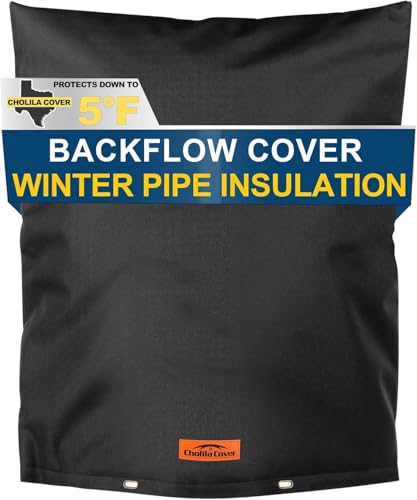
Cholila Cover 16x20-Inch Insulated Backflow Cover, Black (7-layer, foil core)
A 16-by-20-inch insulated pouch for a backflow preventer and its riser pipes, with a foil insulation core and a waterproof shell. Use it during early freezes while the system is still in use, and leave it on after winterizing. Measure your device first; larger assemblies need a bigger size.
Any other exposed pipe needs insulation too. For the above-ground risers and any exposed supply pipe, foam sleeves are the cheap way to do it.

Duck Brand Insulating Foam Pipe Covers, 3/4-Inch x 3-Feet, 4-Pack
Foam sleeves for three-quarter-inch pipe. Fit them over the exposed risers above and below the backflow preventer and any above-ground supply pipe, and seal the seams with tape. Insulation slows freezing but does not stop it in sustained cold, so the parts still need to be drained.
Controller, Rain Sensor and Hose Bibs
The last few steps prevent a surprise run in January.
- Controller. Set it to Off or rain mode, which keeps your program for spring. Leave an outdoor controller powered: the transformer's heat keeps condensation out of the enclosure. The exception is a system with a pump. Unplug an indoor timer, or for an outdoor hard-wired timer, shut off power at the breaker and disconnect its common wire, because a power surge or a long outage could return the timer to automatic mode and run the pump dry.
- Rain sensor. Empty and bag a cup-type sensor; remove and store the wafers from a wafer-type sensor.
- Hose bibs. Disconnect and drain garden hoses and cover outdoor faucets.

Frost King FC1 Outdoor Foam Faucet Cover, 2-Pack
A foam cover for an outdoor faucet. Disconnect the hose first; a hose left attached traps water in the faucet. A cheap backup for the hose bibs you use for winter watering.
In warm climates where the system stays live through winter, a smart controller with a freeze skip setting will cancel a scheduled run when freezing temperatures are forecast, which keeps sprinkler spray from icing sidewalks and streets. It does not replace draining the system ahead of a hard freeze.

Rachio 3 Smart Sprinkler Controller, 16-Zone
A smart controller that skips scheduled runs for rain, wind and freezing forecasts and adjusts run times to local weather, which handles much of the fall cutback in Step One. Most useful in the South and transition zone, where systems run part of the winter.
Watering Through Winter Without the System
Once the system is winterized, any winter watering is done with a hose or bucket. Running water through a winterized system means clearing the pipes all over again.
Most established lawns will not need it, but a long dry spell without snow, especially on a south- or west-facing slope or a lawn seeded this fall, can dry out the grass crowns. The rules, from Colorado State University Extension and Nebraska Extension:
- Water only when air and soil are above 40°F and there is no snow cover.
- Water at midday, so it soaks in before the night turns cold.
- Water during extended dry spells, about once or twice a month.
- Skip any day with a freeze forecast in the next 24 hours, the same rule the winter dormancy care guide uses.
To check whether the soil is frozen, push a screwdriver into the lawn; frozen soil will not absorb water. Your 2-inch soil reading answers the same question without leaving the house. Disconnect and drain the hose when you finish. The winter dormancy care guide covers the rest of the off-season.
Spring: Restart Slowly After the Thaw
The spring restart can damage a system as easily as a fall freeze if it comes too early or too fast.
Wait for the Ground to Thaw
The soil under the lawn is the last thing to thaw, and starting a system in frozen ground can break pipes. Rain Bird's test is simple: dig with a shovel and make sure the soil is frost-free 12 inches deep. If it is still solid, wait a week and try again.
Station readings tell you when to start checking. The stations this site tracks report soil temperature at 2, 4, 8, 20 and 40 inches, so you can watch the thaw move through the ground. They cannot replace the shovel, though: frost thaws from the top and the bottom at the same time, so a frozen layer can linger between the 8-inch and 20-inch depths after both read above freezing. Dig before you turn the water on.
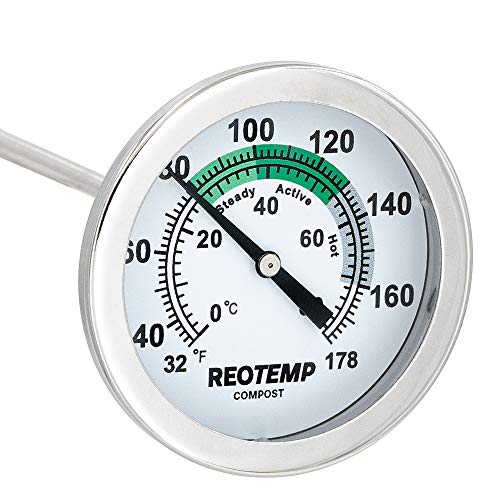
REOTEMP K83B1 12-Inch Soil & Compost Thermometer (32-178°F, dual scale)
A 12-inch stem for reading soil temperature down to the depth Rain Bird checks before a spring restart. It measures temperature, not frost, and a stem can stop on a rock or dry clay, so use it to decide when to dig, then let the shovel test make the call.
The thaw is only half the test. A hard freeze after you turn the system on can still damage it. Denver's average last freeze is May 5, but in 2019 it came on May 22. Wait until the forecast has no more nights of 28°F or colder before you pressurize, and protect the backflow preventer if a late cold snap comes through.
Open the Valves Slowly
Opening a valve fast sends a pressure surge through the pipes, called water hammer, that can burst pipes and damage valves. Close the backflow's test cocks and ball valves first. Then open the main valve slowly so the pipes fill gradually, and open the backflow's ball valves slowly too, upstream valve first, then downstream.
Then run each zone and walk it. Look for broken or tilted heads, geysers, and soggy spots that point to a cracked line. Removing the last head or end cap on each zone and running it for 1 to 2 minutes flushes out debris before the season starts.
Spring restart
Track the thaw at your nearest station
Enter your city or ZIP code to see soil temperatures at 2, 4, 8 and 20 inches, so you know when to start checking for frost before you turn the water back on.
Common Mistakes to Avoid
- Shutting off in September. Cool-season roots keep growing until the ground freezes. Cut back to fall run times instead and keep watering until the lawn goes dormant or the first hard freeze is forecast.
- Running the summer program into October. Fall needs are about 60 percent of summer. Overwatering cool soil wastes water and keeps the canopy wet.
- Waiting for a hard freeze to start planning. Book a blowout service ahead of time, and winterize by the first forecast night of 28°F or colder even if the lawn is still growing.
- Leaving the backflow preventer bare during an early freeze. It is above ground and freezes first. Drain it or wrap it for every freezing night while the system is still in use.
- Using a shop compressor at high pressure. High pressure with low air volume damages fittings and leaves water behind. Set the regulator to 50 psi or less, never above the weakest part on the zone, and rent a larger compressor or hire a professional.
- Blowing air through the backflow device. The heat can melt its rubber seals. Close its valves and connect downstream.
- Leaving ball valves fully open or fully closed. Both positions trap water. Set them at 45 degrees and open the test cocks.
- Winter watering through the sprinkler system. Use a hose, at midday, when air and soil are above 40°F and no freeze is forecast in the next 24 hours, and drain the hose afterward.
- Opening the main valve fast in spring. Water hammer can burst pipes. Wait until a shovel shows the soil frost-free 12 inches deep, then open slowly.