
Soil Temperature in Montana
The current average 2-inch soil temperature across Montana is 38°F. Readings range from 34°F to 42°F, from 12 USDA and NOAA monitoring stations. Soil across Montana is running 3°F above the seasonal normal of 35°F for late November, based on 12 of 12 stations with historical records. Montana spans USDA hardiness zones 4b to 5b, cool-season grass country. Last updated November 18, 2026.
Current Planting Conditions
Reporting stations in Montana average 38°F at 2 inches. As local soil cools, the ideal fall annual bluegrass prevention range is 65–70°F. Cool-season overseeding uses 60–70°F and also depends on time before frost. Check the local schedule before choosing either approach.
Pre-emergent timing in Montana: typical spring and fall application windows from in-state stations.
Frost depth in Montana: where the ground is frozen today and when it typically freezes and thaws.
Best Time to Plant Grass Seed in Montana
Cool-season lawns in Montana typically plant in fall from August 6, as 2-inch soil falls back through 70°F. See when to plant grass seed in Montana.
Average Soil Temperature by Month in Montana
Historical 2-inch soil temperature normals for Montana: the median across 13 in-state stations with multi-year records. Any given year runs ahead of or behind these values; the live average at the top of this page shows where this year stands.
| Month | Average 2-inch soil temperature |
|---|---|
| January | 26°F |
| February | 28°F |
| March | 33°F |
| April | 42°F |
| May | 53°F |
| June | 63°F |
| July | 71°F |
| August | 69°F |
| September | 60°F |
| October | 47°F |
| November | 36°F |
| December | 30°F |
Shaded spring cells fall in the 50°F to 55°F pre-emergent window at 2-inch depth. The highlighted row is the current month.
Grass Seed Germination in Montana
Grass seed germination
Grass seed germination temperatures across Montana. Soil warmth varies by location, so check a city page for the live reading and what germinates there now.
| Grass species | Seeding soil temp (2 in) | Days |
|---|---|---|
| Kentucky bluegrass | 50–65°F | 14-30 |
| Tall fescue | 50–65°F | 7-12 |
| Perennial ryegrass | 50–65°F | 5-10 |
| Fine fescue | 50–65°F | 7-14 |
| Bermudagrass | 75–90°F | 10-30 |
Monitoring Stations in Montana (12)
For root-zone timing (fertilizer, aeration, weed control), see the 4-inch soil temperature for Montana. For accumulated-heat timing, see growing degree days for Montana. For how wet the ground is versus normal, see soil moisture for Montana. See the Montana soil temperature map for the full station view.
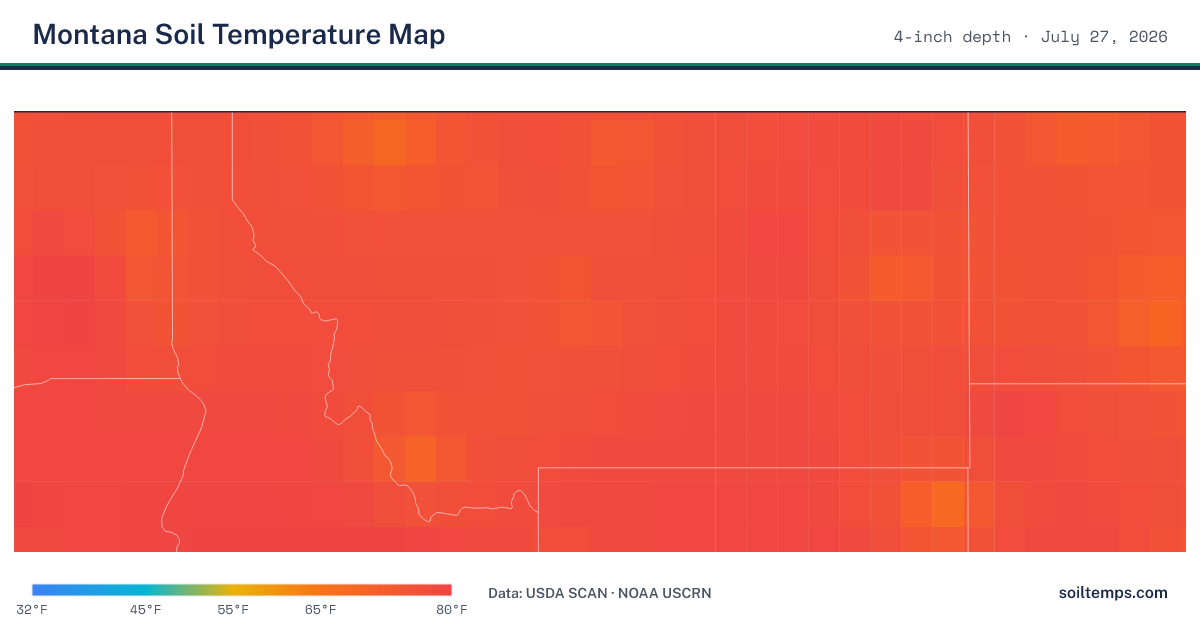
Interpolated from the latest 4-inch readings and refreshed daily.
| Station | 2" Temp | Last Reading |
|---|---|---|
| Fort Assiniboine #1 (Hill) | 38°F | 2026-11-18 |
| Conrad Ag Rc (Pondera) | 35°F | 2026-11-18 |
| Violett (Liberty) | 37°F | 2026-11-18 |
| Moccasin (Judith Basin) | 38°F | 2026-11-18 |
| Sidney (Richland) | 41°F | 2026-11-18 |
| Jordan (Garfield) | 35°F | 2026-11-18 |
| Lindsay (Dawson) | 38°F | 2026-11-18 |
| Table Mountain (Gallatin) | 37°F | 2026-11-18 |
| Dillon 18 WSW | 34°F | 2026-11-18 |
| Lewistown 42 WSW | 38°F | 2026-11-18 |
| Wolf Point 34 NE | 41°F | 2026-11-18 |
| Wolf Point 29 ENE | 42°F | 2026-11-18 |
Soil Temperature by Region in Montana
Current 2-inch readings grouped along Montana's east-to-west axis. Regional spread matters for timing: the warm end of the state can open an application window a week or more before the cool end.
| Region | Avg 2" Temp | Range | Stations |
|---|---|---|---|
| Eastern Montana (Dawson, Richland Counties) | 40°F | 38–42°F | 4 |
| Central Montana (Garfield, Hill, Judith Basin Counties) | 37°F | 35–38°F | 4 |
| Western Montana (Gallatin, Liberty, Pondera Counties) | 36°F | 34–37°F | 4 |
Cities in Montana (9)
| City | ZIP | Current Temp |
|---|---|---|
| Ashland | 59003 | 34°F* |
| Billings | 59101 | 36°F* |
| Bozeman | 59715 | 37°F |
| Butte | 59701 | 37°F |
| Great Falls | 59401 | 35°F |
| Helena | 59601 | 37°F |
| Kalispell | 59901 | 32°F* |
| Missoula | 59801 | 35°F* |
| Roundup | 59072 | 38°F |
Modeled estimate where no monitoring station is within 99 miles; all other readings are measured at USDA and NOAA stations.
Lawn Care Timing Guides for Montana
- When to Apply Winterizer: Late-Fall Nitrogen Timing by Soil Temperature
Late-fall nitrogen for cool-season lawns goes down while the grass is still green and growing and the 2-inch soil temperature is falling through 45-55°F: by mid-October in Minnesota and Vermont, by the end of October in Nebraska, and late October into November farther south.
- When to Stop Mowing Before Winter Dormancy
Use soil temperature, not the calendar, to time your final mow.
- Cool-Season Fertilization Schedule: A Soil-Temperature Nitrogen Plan
Stop guessing when to feed Kentucky bluegrass, tall fescue, perennial rye, and fine fescue.
- Grass Seed Germination Soil Temperature: What Each Species Needs
Check whether your soil is warm enough for the seed you bought: cool-season grass seeds into 50-65°F soil (tall fescue is fastest above 60°F), warm-season from about 65°F.
Soil Temperature FAQ for Montana
What is the current soil temperature in Montana?
The current average 2-inch soil temperature across Montana is 38°F. Readings range from 34°F to 42°F depending on location and elevation, from 12 USDA and NOAA monitoring stations. Soil across Montana is running 3°F above the seasonal normal of 35°F for late November, based on 12 of 12 stations with historical records.
When should I apply pre-emergent in Montana?
For spring crabgrass preventer, the target is 2-inch soil warming through 50–55°F. The barrier needs to be in place before crabgrass begins germinating at a sustained 55°F. For fall annual bluegrass prevention, the ideal range is 65–70°F as the soil cools. Timing varies across Montana, so check your city's page for station-specific readings and the pre-emergent timing recommendation.
When can I plant grass seed in Montana?
Montana spans USDA hardiness zones 4b to 5b, cool-season grass country. For cool-season grasses (fescue, bluegrass), the fall window typically opens around August 6 and the spring window around May 7, based on historical 2-inch soil temperature averages at 13 in-state stations. Timing varies by location, so check your city's planting window for the dates specific to your area.