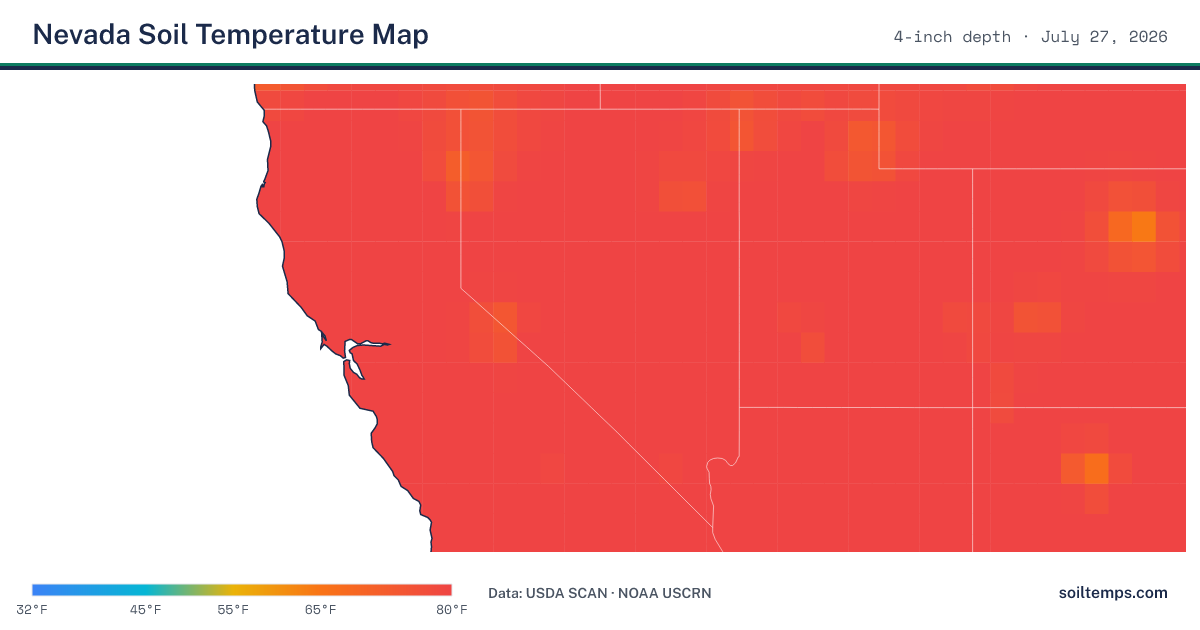
The current average 2-inch soil temperature across Nevada is 64°F. Readings range from 53°F to 110°F, from 11 USDA and NOAA monitoring stations. Soil across Nevada is running 6°F above the seasonal normal of 58°F for early October, based on 11 of 11 stations with historical records. Nevada spans USDA hardiness zones 5a to 10a, crossing from cool-season into warm-season grass country. Last updated September 30, 2026.
Current Planting Conditions
Prime fall conditions across Nevada with soil averaging 64°F at 2 inches. This is the best seeding window of the year for tall fescue and Kentucky bluegrass, and the main fall feeding window for cool-season lawns.
Best Time to Plant Grass Seed in Nevada
Nevada spans both grass families: cool-season lawns are more common toward the cooler, northern parts of the state and at elevation, warm-season lawns toward the warmer south.
Cool-season · fall window
August 1
July 18 (coolest parts) to October 12 (warmest)
For cool-season lawns (fescue, bluegrass, ryegrass), fall is the best time to plant grass seed in Nevada, with spring the second choice: fall seedlings face less weed competition and mature before summer heat. The window opens as 2-inch soil falls back through 70°F, and germination slows sharply once soil drops below 50°F, typically around October 12.
Cool-season · spring window
April 20
February 5 (warmest parts) to May 14 (coolest)
Spring is the second choice: the window opens when soil first holds 50°F and narrows as soil passes 65°F, typically by June 5.
Warm-season · planting window
June 5
March 25 (warmest parts) to July 8 (coolest)
For warm-season lawns (bermuda, zoysia, St. Augustine), the best time to plant grass seed in Nevada is late spring into early summer, when soil is warming and a full growing season lies ahead. The window opens when 2-inch soil reaches 65°F and keeps rising, and closes as soil cools back through 65°F, typically around August 26.
Region
Typical spring window opens
Typical fall window opens
Stations
Northern Nevada
May 11
August 18
4
Central Nevada
April 9
September 16
4
Southern Nevada
April 30
July 18
3
Fall seeding also needs a stop date: new seedlings want about six
weeks of growth before frost arrives. Your city page estimates the
last safe seeding date from its nearest station: see when to plant in Las Vegas, when to plant in Reno or when to plant in Henderson. Readings current through September 30, 2026: Nevada averages 64°F at 2 inches right now; the Current Planting Conditions section above reads that number against the season.
Typical dates are computed from historical 2-inch soil temperature averages at 11 monitoring stations in Nevada; your own window depends on your nearest station's readings.
Average Soil Temperature by Month in Nevada
Historical 2-inch soil temperature normals for Nevada: the median across 11 in-state stations with multi-year records. Any given year runs ahead of or behind these values; the live average at the top of this page shows where this year stands.
Month
Average 2-inch soil temperature
January
32°F
February
34°F
March
38°F
April
47°F
May
56°F
June
67°F
July
73°F
August
68°F
September
61°F
October
51°F
November
39°F
December
35°F
Shaded spring cells fall in the 50°F to 55°F pre-emergent window at 2-inch depth. The highlighted row is the current month.
Grass Seed Germination in Nevada
Grass seed germination
Grass seed germination temperatures across Nevada. Soil warmth varies by location, so check a city page for the live reading and what germinates there now.
Current 2-inch readings grouped along Nevada's north-to-south axis. Regional spread matters for timing: the warm end of the state can open an application window a week or more before the cool end.
Region
Avg 2" Temp
Range
Stations
Northern Nevada (Elko, Pershing, Washoe Counties)
58°F
54–64°F
4
Central Nevada (Clark County)
77°F
55–110°F
4
Southern Nevada (Clark County)
55°F
53–58°F
3
Cities in Nevada (20)
Cities in Nevada with current soil temperature readings
Time fall pre-emergent ahead of poa annua germination.
Soil Temperature FAQ for Nevada
What is the current soil temperature in Nevada?
The current average 2-inch soil temperature across Nevada is 64°F. Readings range from 53°F to 110°F depending on location and elevation, from 11 USDA and NOAA monitoring stations. Soil across Nevada is running 6°F above the seasonal normal of 58°F for early October, based on 11 of 11 stations with historical records.
When should I apply pre-emergent in Nevada?
Apply pre-emergent herbicide when soil at 2 inches reaches 55°F for several consecutive days. Timing varies across Nevada, so check your city's page for station-specific readings and the pre-emergent timing recommendation.
When can I plant grass seed in Nevada?
Nevada spans USDA hardiness zones 5a to 10a, crossing from cool-season into warm-season grass country. For cool-season grasses (fescue, bluegrass), the fall window typically opens around August 1 and the spring window around April 20; for warm-season grasses (bermuda, zoysia), the window typically opens around June 5, based on historical 2-inch soil temperature averages at 11 in-state stations. Timing varies by location, so check your city's planting window for the dates specific to your area.