
Quick Answer: Can You Still Seed Your Lawn in Late Fall or Winter?
Yes, for a cool-season lawn. Spread the seed once 2-inch soil has fallen below 40°F and is staying there. The seed lies unsprouted through winter, freezing and thawing work it into the soil, and it germinates in spring when the soil warms back to about 50°F. Across most cool-season states that point typically arrives between late October and mid-January, and seeding can continue into early March. Seed thin and bare spots, apply no fertilizer until spring, and plan on skipping a standard crabgrass pre-emergent on that ground next spring.
Quick Answer
Check whether your soil is cold enough yet
Enter your city or ZIP code to see the latest daily 2-inch soil temperature from the nearest soil monitoring station, or a modeled estimate for your location.
Dormant seeding is the answer to a question that comes up every November: the fall seeding window has closed, the lawn is still thin, and spring seeding means watering a seedbed while crabgrass comes up beside it. Seed spread on cold soil skips most of that. It sits through winter and starts growing as early as the soil allows.
It is also easy to get wrong in one specific way: seeding too early. Seed that sprouts in a warm spell in late fall or midwinter is killed when the cold comes back. This guide covers when your soil is cold enough, using typical dates by state from our station network, then how to seed, what to expect in spring, and the crabgrass trade-off.
The timing rules and methods here come from university extension turf programs and their field trials. They agree on the basics and disagree on several details (seeding rate, snow, site preparation, which species does best), and where they disagree we say so.
What Dormant Seeding Is, and What It Is Not
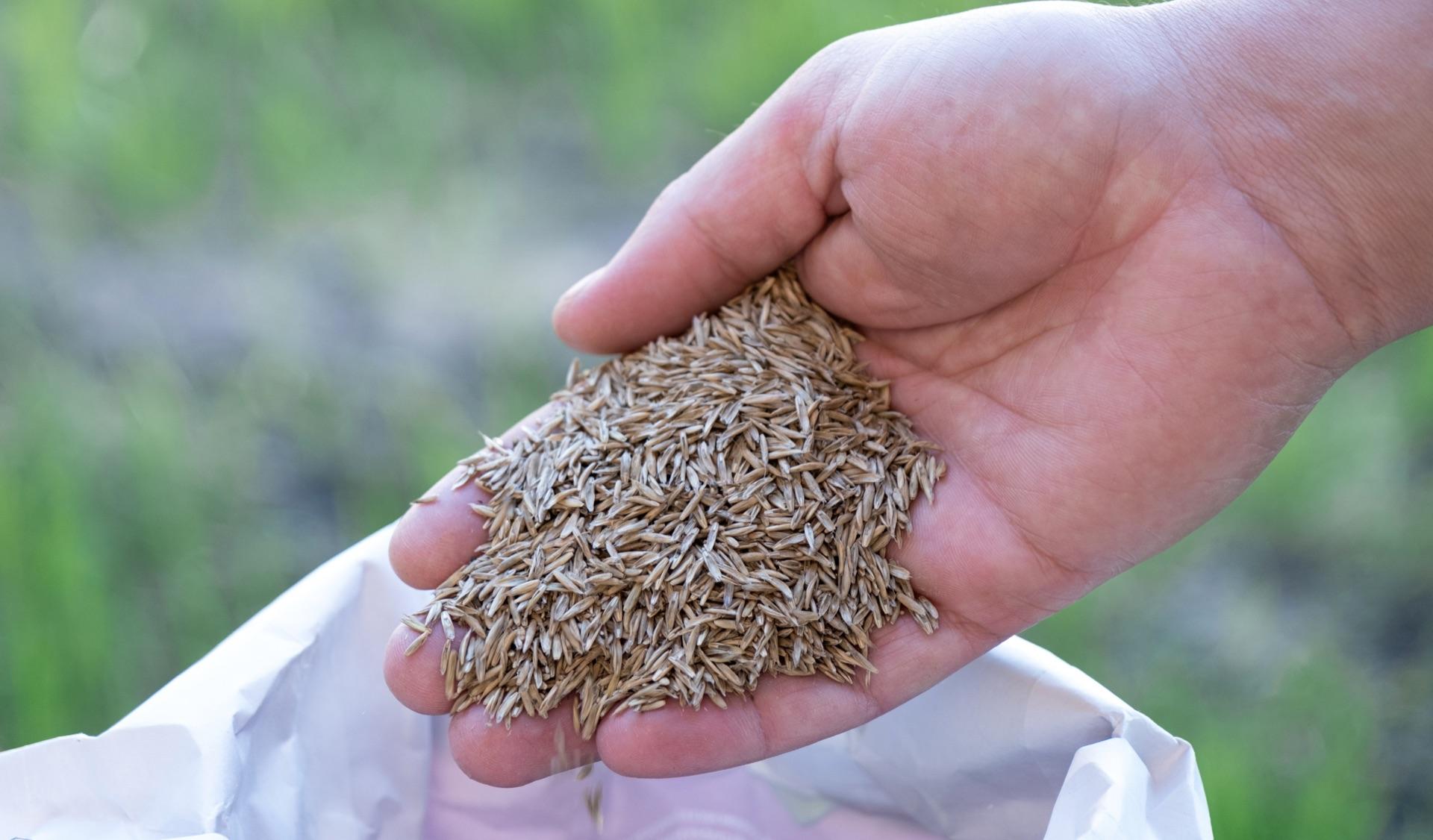
Dormant seeding means spreading cool-season grass seed (tall fescue, Kentucky bluegrass, perennial ryegrass, fine fescue) when the soil is too cold for it to germinate, so it waits for spring. Over winter, the soil freezes and thaws, opening small cracks that settle the seed into contact with the soil. When the soil warms in spring, the seed germinates on its own schedule, often before you could have prepared and seeded the same ground.
It is not:
- Winter overseeding of a warm-season lawn. Overseeding dormant Bermuda or zoysia with ryegrass for winter color is a fall practice with its own timing; see our warm-season overseeding guide.
- A way to seed warm-season grass. Bermuda, zoysia and other warm-season seed need warm soil to germinate, and winter-sown warm-season seed gives crabgrass a head start on it.
- A fix for a thick lawn. The seed has to reach soil. It works for thin turf and bare spots; spread over a dense lawn, most of it never touches the ground.
When to Start: Soil Below 40°F
The University of Minnesota and Nebraska Extension both set the line at 40°F: seed once the soil is below it, so the seed cannot germinate before spring. Neither gives a depth. We read it at 2 inches, the depth our station network reports closest to where the seed sits. Kansas State and a 2024 Minnesota newsletter allow up to 45°F. Where you land between 40°F and 45°F matters less than the trend: the soil should be cold and still cooling.
Too early is the main way dormant seeding fails. Kansas State's 2026 trial, run with Purdue in Kansas and Indiana, seeded the same grasses at several dates. The mid-November seedings sprouted in the fall and were injured over winter; the December seedings stayed dormant and reached 84 to 99 percent cover by June for the fescues and ryegrass. Purdue's guidance is to seed after Thanksgiving, and for tall fescue to consider waiting until late December. A cold week in early November does not make it dormant seeding season if the forecast turns mild again.
Soil cools weeks behind the air. A string of frosty mornings in early November can leave 2-inch soil in the upper 40s, warm enough for a warm spell to sprout the seed. Wait for the soil reading, then check that the forecast is not calling for a long mild stretch. Our soil thermometer guide covers taking your own reading.
Typical Dormant Seeding Windows by State
The table gives each state's typical window from our station data: the date 2-inch soil typically falls below 40°F, and the spring date it typically warms back to 50°F, when the seed germinates and the ordinary spring seeding window opens. These are long-term averages; this year's soil can run a week or more either side, so check your current reading before you spread seed.
| State | Window opens: 2-inch soil falls below 40°F | Window closes: spring seeding opens at 50°F | Earliest to latest station opening | Stations |
|---|---|---|---|---|
| Alabama | January 17 | February 27 | Jan 6 to Jan 20 | 8 (23 more stay above 40°F) |
| Arizona | Typically stays above 40°F | Not applicable | 4 | |
| Arkansas | January 20 | March 1 | Jan 18 to Jan 20 | 3 (4 more stay above 40°F) |
| California | November 15 | April 21 | Oct 11 to Dec 8 | 12 (14 more stay above 40°F) |
| Northern California | November 8 | April 26 | 4 | |
| Central California | November 17 | May 4 | 4 | |
| Southern California | November 16 | April 3 | 4 | |
| Colorado | November 13 | April 23 | Oct 25 to Nov 24 | 8 |
| Eastern Colorado | November 11 | April 22 | 3 | |
| Central Colorado | October 30 | May 8 | 3 | |
| Western Colorado | November 16 | April 28 | 2 | |
| Florida | Typically stays above 40°F | Not applicable | 5 | |
| Georgia | Typically stays above 40°F | Not applicable | 5 | |
| Hawaii | Typically stays above 40°F | Not applicable | 6 | |
| Idaho | November 16 | April 27 | Oct 27 to Nov 17 | 4 |
| Illinois | November 25 | April 5 | Nov 21 to Jan 1 | 3 |
| Iowa | November 28 | April 24 | Nov 20 to Dec 8 | 3 |
| Kansas | December 14 | April 1 | Nov 26 to Jan 7 | 6 |
| Eastern Kansas | December 18 | April 10 | 2 | |
| Central Kansas | January 7 | March 29 | 2 | |
| Western Kansas | November 26 | April 10 | 2 | |
| Kentucky | January 12 | March 12 | Jan 12 to Jan 19 | 3 |
| Louisiana | Typically stays above 40°F | Not applicable | 2 | |
| Maine | November 16 | May 10 | Nov 11 to Nov 16 | 2 |
| Michigan | November 15 | May 11 | Nov 14 to Nov 15 | 2 |
| Minnesota | November 15 | May 11 | Nov 8 to Nov 18 | 4 |
| Mississippi | Typically stays above 40°F | Not applicable | 16 | |
| Missouri | January 1 | March 26 | Dec 10 to Jan 11 | 15 |
| Eastern Missouri | January 4 | March 21 | 5 | |
| Central Missouri | December 17 | March 31 | 5 | |
| Western Missouri | January 1 | March 26 | 5 | |
| Montana | October 28 | May 7 | Oct 23 to Nov 8 | 13 |
| Nebraska | November 21 | April 11 | Nov 6 to Nov 25 | 6 |
| Nevada | November 15 | May 2 | Oct 25 to Dec 6 | 10 (1 more stay above 40°F) |
| Northern Nevada | October 29 | May 9 | 4 | |
| Central Nevada | November 16 | April 30 | 4 | |
| Southern Nevada | December 6 | May 3 | 2 | |
| New Hampshire | November 23 | April 30 | Nov 21 to Nov 27 | 3 |
| New Mexico | December 11 | March 22 | Nov 7 to Jan 9 | 8 (2 more stay above 40°F) |
| Eastern New Mexico | January 5 | March 1 | 3 | |
| Central New Mexico | November 15 | April 2 | 3 | |
| Western New Mexico | December 30 | March 28 | 2 | |
| New York | November 20 | April 11 | Nov 19 to Nov 26 | 3 |
| North Carolina | Typically stays above 40°F | Not applicable | 2 | |
| North Dakota | November 12 | May 13 | Nov 1 to Nov 14 | 4 |
| Ohio | December 14 | April 12 | Dec 5 to Dec 14 | 2 |
| Oklahoma | January 12 | March 20 | Jan 2 to Jan 17 | 5 |
| Oregon | December 30 | April 4 | Nov 7 to Jan 23 | 3 (1 more stay above 40°F) |
| Pennsylvania | November 28 | April 11 | Nov 24 to Dec 10 | 3 |
| Rhode Island | December 12 | April 25 | Nov 26 to Dec 12 | 2 |
| South Carolina | Typically stays above 40°F | Not applicable | 4 | |
| South Dakota | November 14 | May 3 | Nov 5 to Nov 20 | 5 |
| Tennessee | Typically stays above 40°F | Not applicable | 2 | |
| Texas | January 7 | February 26 | Nov 27 to Jan 8 | 3 (14 more stay above 40°F) |
| Utah | November 10 | April 27 | Oct 25 to Dec 8 | 32 |
| Northern Utah | November 9 | May 1 | 11 | |
| Central Utah | November 11 | April 22 | 11 | |
| Southern Utah | November 14 | April 22 | 10 | |
| Vermont | November 17 | May 17 | Nov 16 to Nov 17 | 2 |
| Virginia | January 13 | March 18 | Dec 16 to Jan 18 | 4 (1 more stay above 40°F) |
| Eastern Virginia | January 18 | March 18 | 2 | |
| Central Virginia | January 13 | April 2 | 2 | |
| Washington | November 15 | April 25 | Nov 8 to Jan 15 | 5 |
| Eastern Washington | November 13 | May 2 | 2 | |
| Central Washington | December 3 | April 18 | 3 | |
| Wisconsin | November 19 | May 1 | Nov 19 to Nov 20 | 3 |
| Wyoming | October 31 | May 8 | Oct 27 to Nov 8 | 4 |
Typical dates from multi-year 2-inch soil temperature averages at USDA and NOAA monitoring stations, computed 2026-11-15. The opening date is when the average first holds below 40°F for five days; a mild spell can still follow it. The closing date is when the average warms back to 50°F and the seed germinates, not a sowing deadline. Each date is a median across the stations in the state where the soil both falls below 40°F in winter and warms back to 50°F in spring. Where some of a state's stations never get that cold, the stations column says how many, and the dates describe the colder part of the state. Where a state's openings spread widely, regional rows follow it; a wide range with no regional rows usually means mountain and valley stations in the same state. States without at least two stations with a full record are left out; use the search above for your own city. Each state name links to that state's planting dates.
Two patterns stand out:
- In the northern tier and the mountain West, the soil typically falls below 40°F in late October or November and does not warm back to 50°F until April or May. Seed once the soil has stayed cold for a week or two and the forecast holds no long mild spell, through early March; December through February is the safest stretch. The later closing dates are when the seed comes up, not extra weeks to sow.
- Across much of the South and the transition zone, 2-inch soil typically stays above 40°F all winter, at most stations in Alabama, Georgia, the Carolinas, Tennessee, Mississippi, Louisiana and Florida. Seed spread there in winter can sprout in any warm week and then meet a hard freeze. For a tall fescue lawn in those states, the safer choices are seeding at the start of the spring window or, better, waiting for the fall seeding window. See the fall overseeding guide.
How Late Can You Go?
Into early March in most cool-season states. Nebraska Extension sets March 15 as the latest date, and Purdue gives "as late as March" for Indiana. The window closes when your soil starts warming toward 50°F: seed spread after that is a spring seeding, with spring seeding's needs (a prepared seedbed and regular watering). Our spring overseeding guide covers that. In Kansas State's trial, March seedings of tall fescue, fine fescue and Kentucky bluegrass reached only 33 to 64 percent cover by late June; perennial ryegrass did best from March, at 82 percent.
Late winter is a good choice where early winter is unreliable. Missouri's turf program suggests February or March for its state's broad temperature swings, because the seed spends less time exposed before spring.
How to Dormant Seed
Pick the spots
Dormant seeding pays off on thin areas and bare patches. Clear fallen leaves first so the seed reaches the soil. On a slope or bare soil that washes, plan to cover the seed (see "Bare soil and slopes" below).
Prepare the soil, or not
Sources disagree on preparation. The University of Minnesota and Purdue's diagnostic lab say none is needed: spread the seed, do not rake it, and let freezing and thawing work it in. Nebraska Extension and Missouri's turf program call seed-to-soil contact critical and recommend loosening the soil first. Nebraska suggests core aeration or light power raking that disturbs only the top quarter inch.
A reasonable middle course: on bare soil, loosen the surface with a rake before spreading. In thin turf, spread onto the existing lawn, after core aerating if you aerated this fall or can do it before the ground freezes. Spread on dry days so the seed flows evenly.
Choose the seed
Tall fescue has the most consistent results in the trials we read. A Minnesota trial seeded it straight into a dead crabgrass stand in November with no preparation, and its quick growth filled in and limited the space left for crabgrass. Nebraska's trials prefer it over Kentucky bluegrass.
Choose plain seed for dormant seeding, not a mix with fertilizer or a soil amendment in the coating: anything besides seed sits on cold ground all winter, where it can run off.
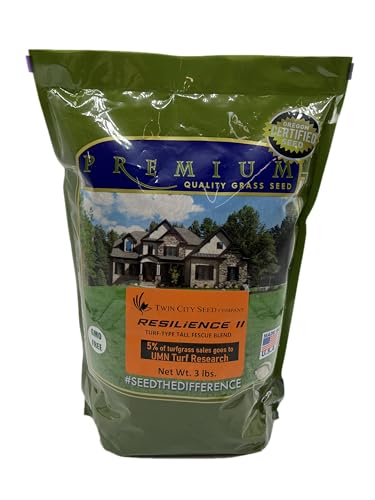
Turf-Type Tall Fescue Blend
A blend of five turf-type tall fescue varieties; the maker lists no fertilizer or coating in it.
Kentucky bluegrass is where the sources split. Its slow germination keeps it from sprouting early in a warm spell, which is why Purdue and UMass favor it for dormant seeding. In Kansas State's 2026 trial it was the weakest species from both the December and February seedings, at 53 to 60 percent cover by June. It suits northern lawns that are already bluegrass.
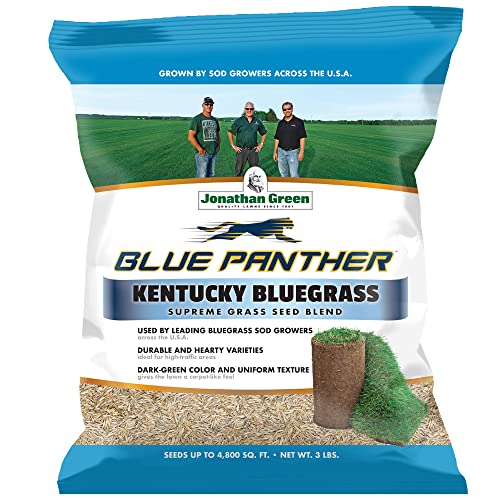
Jonathan Green Blue Panther Kentucky Bluegrass, 3 lb
Perennial ryegrass establishes fastest in spring. It can also germinate below 40°F, so it is the species most likely to sprout in a winter warm spell; UMass notes dormant seeding works less well for it than for slower species. Use it where quick cover matters and the winter stays reliably cold.
Set the seeding rate
Here the sources disagree most:
| Source | Seeding rate advice |
|---|---|
| Nebraska Extension (trial) | No increase needed; Kentucky bluegrass 2-3 lb and tall fescue 6-8 lb per 1,000 sq ft on bare ground, about half that to thicken a thin lawn |
| Purdue diagnostic lab | Same rate as a bare-ground seeding |
| Kansas State | About 25 percent more, to cover seed lost to runoff and erosion |
| Rutgers | Often 30 to 50 percent more, to cover washouts and birds |
Use the normal rate on the bag, and keep 10 to 20 percent extra on hand, as the University of Minnesota suggests, to patch any spots that fail to come up in late spring. Spread half the seed in one direction and half crosswise for even coverage.
Snow and frozen ground
Unfrozen, snow-free soil is the safe choice: it lets you loosen bare spots and see where seed is needed. Nebraska Extension says not to seed over snow, though continuous snow cover over seed already on the ground protects it. The University of Minnesota says seed spread on melting snow still works, and its 2024 newsletter credits snow with moving seed into contact with the soil. UMass warns that a winter with little snow can dry seed out.
No fertilizer now
Apply only seed. Rutgers points out that fertilizer should never go on snow-covered or frozen soil, where it runs off. Feed with a starter fertilizer in spring, around the first mowing.
Bare soil and slopes
Seed on bare ground can wash away in snowmelt or heavy rain. On bare patches and slopes, cover the seed with an erosion control or germination blanket, which the University of Minnesota recommends for bare soil and which made a clear difference in its demonstration plots. If you use a mulch instead, choose a light-colored one such as straw: UMass warns that dark mulch warms the soil and can trigger early germination.

EZ Straw Seeding Mulch with Tack, 1 cu ft
Spring: What Happens Next
Most cool-season seed comes up once the soil is consistently above 50°F, which usually takes air temperatures of 60°F or warmer. Some starts sooner: the University of Minnesota says emergence may begin as soil rises above 40°F, and perennial ryegrass germinates even colder, so start watching the seeded spots in late winter. Nebraska Extension expects most of it in mid-April. After a mild winter it can come in March: Minnesota saw dormant-seeded fine fescue sprouting on March 8, 2024.
Three things to do once seedlings appear:
- Water if spring turns dry. Irrigation systems are often still off, so plan on a hose. In Minnesota's 2023 demonstration, four days above 80°F with strong wind after the snow melted dried out the bare plots that had no blanket. Keep the top half inch to inch of soil moist until the seedlings are established.
- Fertilize around the first mowing with a starter fertilizer, especially if your soil is low in phosphorus. Our cool-season fertilization schedule covers the rest of the year.
- Mow once the new grass reaches mowing height, and patch any spots that failed with the seed you held back.
How big is the head start? Sources differ. Purdue's diagnostic lab puts it at a week or two of earlier germination, which can decide whether seedlings survive their first summer; a Cornell turfgrass page written for sports fields says two to three weeks. Missouri's turf program cites Purdue trials in which November, December and March dormant seedings established faster than April or May seedings. It does not work every year: in Nebraska's 2014 trial, after a late spring frost, the spring-seeded plots had more cover in June than the dormant-seeded ones, and UMass says dormant seeding "may or may not" beat an early spring seeding.
The Spring Crabgrass Trade-Off
Most crabgrass pre-emergents stop grass seed from establishing as well as crabgrass. Ground you dormant-seeded cannot get a standard spring pre-emergent such as prodiamine, dithiopyr or pendimethalin until the new grass is established. That is the main cost of dormant seeding, and it is the same either/or that applies to any spring seeding; our pre-emergent timing guide and pre-emergent versus post-emergent guide cover it in full.
Your options:
- Mesotrione (Tenacity, also sold blended into some starter fertilizers) has pre-emergent activity and is relatively safe on some cool-season seedlings. Its soil activity lasts about four weeks against about eight for standard pre-emergents, so it may need a second application. The University of Minnesota advises against it when fine fescue makes up more than 20 percent of the seed mix. Once the grass is up, the Tenacity label says to wait until the new grass has been mowed twice or four weeks after it emerges, whichever is longer, before spraying it over the seedlings.
- Wait and treat. Let the new grass come in, then control crabgrass with a post-emergent after the second or third mowing.
Older extension pages recommend siduron (sold as Tupersan) for dormant-seeded ground. It is no longer sold: the EPA cancelled the last registered siduron products effective December 31, 2020.

Tenacity Herbicide (Mesotrione)
Mesotrione weed control that cool-season seedlings tolerate far better than standard pre-emergents. Shorter soil activity, so it may need a second application. Over newly emerged grass, wait for two mowings or four weeks, whichever is longer, per the label.
Part of dormant seeding's appeal is that the seedlings fill in during cool spring weather, before crabgrass germinates as the soil warms past 55°F. A dense young stand leaves crabgrass less room even without a pre-emergent.
Risks to Plan For
- Warm spells. Seed that germinates in a mild stretch and then meets a hard freeze dies. This is the risk every source names first, and the reason to wait for cold soil.
- Washouts and erosion. Seed on bare soil or slopes can move with snowmelt and heavy rain.
- Birds. Rutgers counts bird feeding among the losses; the University of Minnesota reports not having seen it. Seeding later in winter shortens the exposure.
- A dry, warm spring. Seedlings that come up early can dry out before you would normally think about watering.
- No pre-emergent. Expect to handle crabgrass with a post-emergent this first summer.
Common Mistakes
- Seeding on the first cold snap. Frosty air in early November does not mean cold soil. Wait for the soil reading.
- Seeding a dense lawn. Seed that never reaches soil does nothing.
- Adding fertilizer with the seed. It runs off frozen ground and feeds nothing until spring.
- Spreading a standard crabgrass pre-emergent on the seeded area in spring. It stops the new grass along with the crabgrass.
- Dormant seeding where the soil rarely gets cold. In much of the South, wait for the spring or fall seeding window instead.
- Dormant seeding a warm-season lawn. This method is for cool-season grass.